
Palm tree lighting outdoor design is the practice of using directional fixtures, color-calibrated LEDs, and layered placement techniques to transform palm trees into architectural focal points after dark. The right design turns a residential landscape into something genuinely striking, not just illuminated. Professionals rely on tools like OSRAM COB LEDs, Newon palm tree ring lights, and DMX512 control systems to achieve results that hold up in coastal climates and demanding outdoor conditions. This guide covers fixture selection, precise placement, installation steps, and the most common mistakes that undermine otherwise well-planned tropical garden illumination.
What are the best fixtures for palm tree lighting outdoor design?
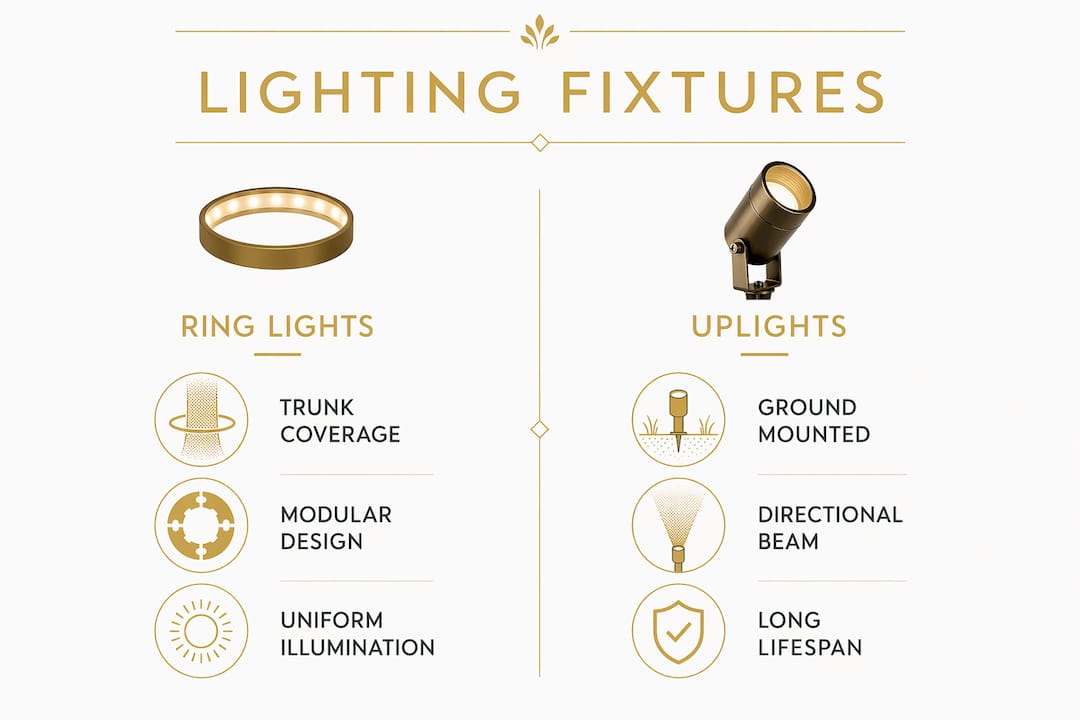
The two primary fixture categories for outdoor palm tree lights are ground-mounted uplights and palm tree ring lights. Each serves a different purpose, and the best designs use both.
Palm Tree Ring Lights
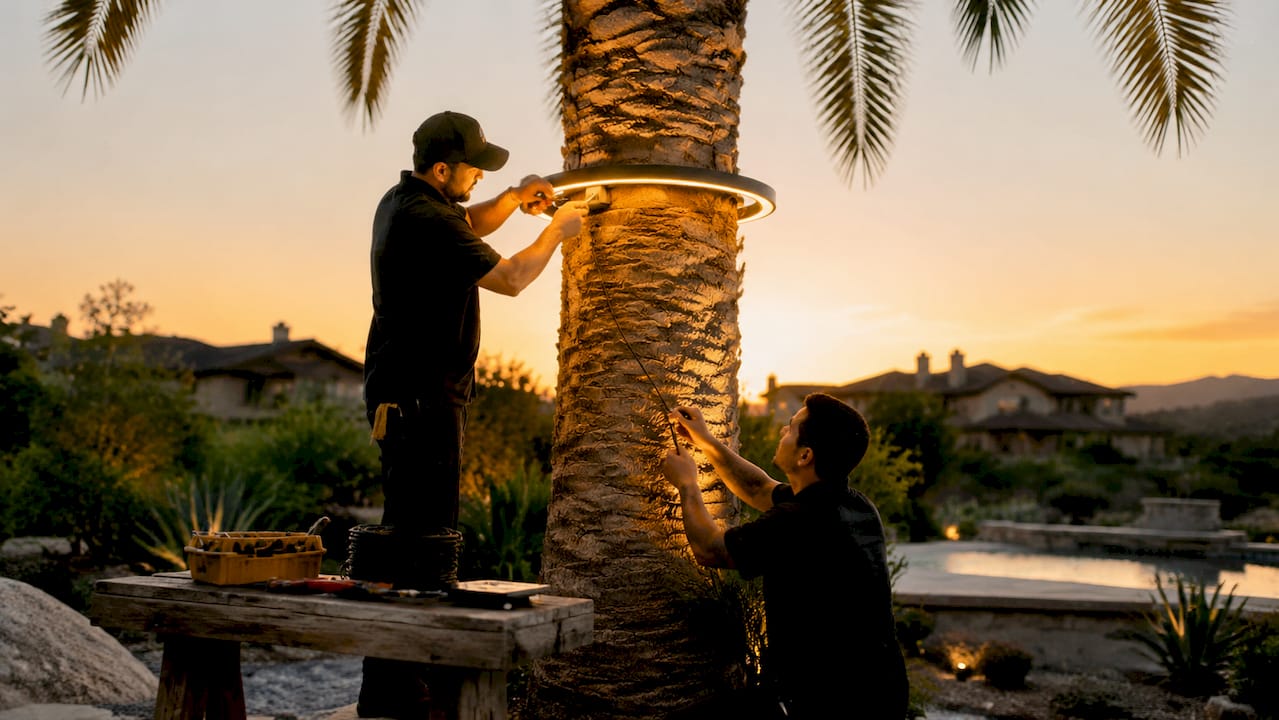
Ring lights are modular fixtures that wrap around the trunk at height. Newon's ring lights fit trunk diameters from 10 to 60 inches and use 12W per spotlight for balanced illumination. That output level is enough to saturate the canopy without washing out the frond color. High-end models use OSRAM COB LEDs with CRI above 90, which render the natural green of palm fronds accurately rather than shifting them toward yellow or gray.
LED Floodlights and Uplights
LED palm tree floodlights offer lifespans over 50,000 hours with 5-year warranties and support DMX512 for programmable lighting effects. That lifespan translates to roughly 17 years of nightly use before replacement. Beam angles on these fixtures range from 5 to 120 degrees, giving designers precise control over spread.
| Fixture Type | Best Use | Beam Angle | Key Feature |
|---|---|---|---|
| Palm tree ring light | Trunk and canopy coverage | 360° uniform | Modular sizing, 12W per spotlight |
| LED uplight spotlight | Ground-level uplighting | 25–40 degrees | Focused frond illumination |
| LED floodlight | Wide canopy wash | 60–120 degrees | DMX512 compatible, 50,000+ hour lifespan |
| Moonlight fixture | Downlighting from height | 30–60 degrees | Simulates natural moonlight effect |
Color Temperature Matters
The ideal color temperature for palm trees is 2700K warm white. This preserves the natural green of the fronds and creates the warm, tropical atmosphere that makes palm tree decor lighting so visually compelling. Cool white fixtures above 4000K push fronds toward a washed-out, clinical appearance that reads as unnatural at night.
For coastal properties in Malibu or Pacific Palisades, choose fixtures rated IP66 with 304-grade stainless steel construction. Salt air corrodes standard aluminum housings within two to three seasons. The right material choice extends fixture life well beyond 50,000 hours.
How should you position fixtures for maximum visual impact?
Fixture placement determines whether a palm looks dramatic or flat. The geometry of uplighting is specific, and small errors in angle or distance produce visible problems.
The 2-3 Foot Rule
Fixtures placed 2–3 feet from the trunk at 30–45 degree angles best illuminate fronds while hiding the light source from view. Placing a fixture too close creates harsh shadows and visible glare at eye level. Placing it too far disperses the beam before it reaches the canopy, leaving the upper fronds dim.
Beam Angle Selection
- Use 25–40 degree narrow beams for focused frond illumination on tall palms
- Use 60–90 degree wide beams for shorter palms where canopy spread is broader
- Avoid beams above 100 degrees for uplighting. They scatter light onto surrounding surfaces and reduce the perceived brightness on the tree itself.
Ring Light Positioning
For tall palms, ring lights provide more uniform illumination of trunk and canopy compared to ground uplighting, which loses intensity with height. Ground uplights work well for palms under 20 feet. For anything taller, a ring light mounted at the base of the frond crown delivers the 360-degree coverage that ground fixtures cannot achieve.
Layering Uplighting with Moonlighting
Combining uplighting with moonlighting inside the tree canopy creates a natural, multidimensional effect. Moonlighting involves mounting a downward-facing fixture high in the canopy or on a nearby structure to cast soft shadows downward. The result mimics natural moonlight and adds depth that single-source uplighting cannot replicate.
Pro Tip: Install a test fixture before committing to permanent mounting. Walk the property at dusk and observe the effect from multiple viewing angles, including from the street and from interior windows. Adjust the angle and distance before anchoring anything.
What tools and preparation steps does installation require?
Good preparation prevents the most common installation failures. Measure before you order, and plan your power routing before you dig.
Measurement and Fixture Sizing
- Measure the trunk diameter at the height where the ring light will mount, typically 6–8 feet above grade for most residential palms.
- Select a ring light module that matches the measured diameter. Newon's modular system covers 10 to 60 inches, so most residential palms fall within range.
- Calculate the number of spotlights needed based on trunk circumference. One spotlight per 12–18 inches of circumference provides even coverage.
- Confirm the mounting height clears any irrigation heads or landscape features below.
Electrical and Wiring Essentials
Low-voltage systems (12V) are the standard for residential landscape lighting. They are safer to install, easier to adjust, and compatible with most smart control systems. Line-voltage systems (120V) are used for high-output commercial floodlights and require licensed electrical work.
| Wiring Type | Voltage | Best Application | Installer Requirement |
|---|---|---|---|
| Low-voltage cable | 12V | Residential uplights, ring lights | Homeowner or landscape contractor |
| Line-voltage conduit | 120V | High-output floodlights | Licensed electrician |
| DMX512 data cable | Signal only | Smart control systems | AV or lighting technician |
Pro Tip: Run conduit even for low-voltage cable. It protects wiring from root damage, irrigation systems, and future landscaping work. Retrofitting conduit after the fact costs significantly more than installing it during the original project.
Weatherproofing and Hardware
All junction boxes and connectors must be rated for outdoor use. Use waterproof wire nuts or gel-filled connectors at every splice. For coastal properties, stainless steel mounting hardware prevents the rust staining that standard zinc screws leave on light-colored trunks.
How do you install palm tree lighting step by step?
A methodical installation produces consistent, professional results. Rushing the process creates uneven coverage and wiring problems that are difficult to diagnose after the fact.
- Clean the trunk surface at the mounting height. Remove loose bark, debris, or moss that would prevent the ring light from seating flush.
- Dry-fit the ring light around the trunk without securing it. Confirm the fit and adjust the module size if needed.
- Mark spotlight positions evenly around the circumference using a measuring tape. Even spacing is the single biggest factor in achieving balanced 360-degree coverage.
- Secure the ring light using the manufacturer's mounting hardware. Do not overtighten on fibrous palm trunks. Use backing plates if the trunk surface is irregular.
- Angle each spotlight toward the frond crown. Start at 30 degrees and adjust upward to 45 degrees for taller canopies.
- Route the power cable down the trunk in a straight line. Use UV-resistant cable ties spaced every 12 inches. Avoid running cable across the trunk face where it will be visible.
- Connect to the transformer or driver using weatherproof connectors. Confirm polarity before energizing.
- Test at dusk with the full system powered. Walk the property and check for:
- Uneven brightness between spotlights
- Visible fixture hardware from key viewing angles
- Glare at eye level from any fixture
- Dark zones in the canopy
Adjust individual spotlight angles to correct uneven coverage before finalizing the installation. A single spotlight aimed 10 degrees off target creates a visible bright patch that reads as unprofessional.
Pro Tip: Photograph the finished installation from the street, the patio, and any interior windows that face the tree. These images serve as a reference baseline for future maintenance checks and help you replicate the effect if fixtures are ever disturbed.
What are the most common pitfalls in palm tree lighting design?
Even well-specified fixtures produce poor results when design or installation errors go uncorrected. These are the problems that appear most often on residential projects.
- Glare from exposed fixtures. Improper beam placement causes glare and detracts from the tree's visual appeal. Fixtures should be invisible from normal viewing angles. Recess ground fixtures into the soil or use shroud accessories to block direct sightlines.
- Yellow fronds from cool-temperature LEDs. Fixtures above 4000K shift palm fronds toward yellow or gray. Always specify 2700K warm white for tropical garden illumination.
- Visible hardware on the trunk. Cable ties, junction boxes, and mounting brackets should be color-matched to the trunk or concealed behind the ring light housing.
- Underlit canopy on tall palms. Ground uplights lose intensity over distance. For palms above 20 feet, supplement with ring lights or canopy-mounted fixtures.
- Poor weatherproofing at connections. Water intrusion at splice points causes flickering, corrosion, and eventual fixture failure. Use gel-filled connectors and inspect all connections annually.
Smart Controls and Adaptability
Smart LED lighting systems allow homeowners to tailor outdoor atmosphere and conserve energy. This represents a clear shift away from fixed, single-output fixtures. DMX512 compatible systems let you program seasonal color shifts, dim levels for different times of night, and dynamic effects for entertaining. The investment pays off in both energy savings and design flexibility over the life of the installation.
Pro Tip: Schedule a maintenance check every six months. Check for shifted fixture angles, corroded connectors, and burned-out spotlights. A single failed spotlight on a ring light creates an obvious dark gap that undermines the entire effect.
Key takeaways
Effective palm tree lighting outdoor design depends on matching the right fixture technology to the tree's height, selecting 2700K warm white LEDs, and layering uplighting with ring light or moonlighting techniques for depth and balance.
| Point | Details |
|---|---|
| Color temperature is non-negotiable | Use 2700K warm white LEDs to preserve natural frond color and tropical warmth. |
| Ring lights outperform ground uplights on tall palms | For palms above 20 feet, ring lights deliver uniform 360-degree coverage that ground fixtures cannot match. |
| Fixture placement follows a precise formula | Position fixtures 2–3 feet from the trunk at 30–45 degree angles to illuminate fronds and hide hardware. |
| Coastal climates demand IP66 and 304 stainless steel | Salt air destroys standard fixtures. Specify rated materials from the start to protect your investment. |
| Smart controls future-proof the design | DMX512 compatible systems allow seasonal programming, dimming, and energy management without rewiring. |
What i've learned designing palm lighting for estate properties
Most designers treat palm tree lighting as a single-fixture problem. They plant an uplight at the base, aim it up, and call it done. That approach works for a 12-foot queen palm in a suburban yard. It does not work for a 40-foot Canary Island date palm on a Bel Air estate.
The designs that genuinely impress combine at least two techniques. A ring light at the frond crown handles the canopy. A narrow-beam uplight at the base adds trunk texture. A moonlight fixture mounted on a nearby structure or in the canopy itself casts downward shadows that make the whole composition feel alive. The layered uplighting and moonlighting approach is what separates a professional result from a competent one.
The other thing I've noticed is that designers underestimate how much the surrounding landscape affects palm lighting. A well-lit palm next to an unlit hedge looks isolated. The same palm with softly lit ground cover and a grazed wall behind it looks intentional. Think of the palm as the centerpiece of a composition, not a standalone feature.
Finally, the shift toward programmable, energy-efficient systems in 2026 is real and worth embracing early. Clients who invest in DMX512 compatible fixtures now have the flexibility to change their lighting program for seasons, events, or simply personal preference without touching a single fixture. That adaptability is what keeps a lighting design feeling fresh five years after installation.
— Chris
How Elegantoutdoorlights can design your palm lighting
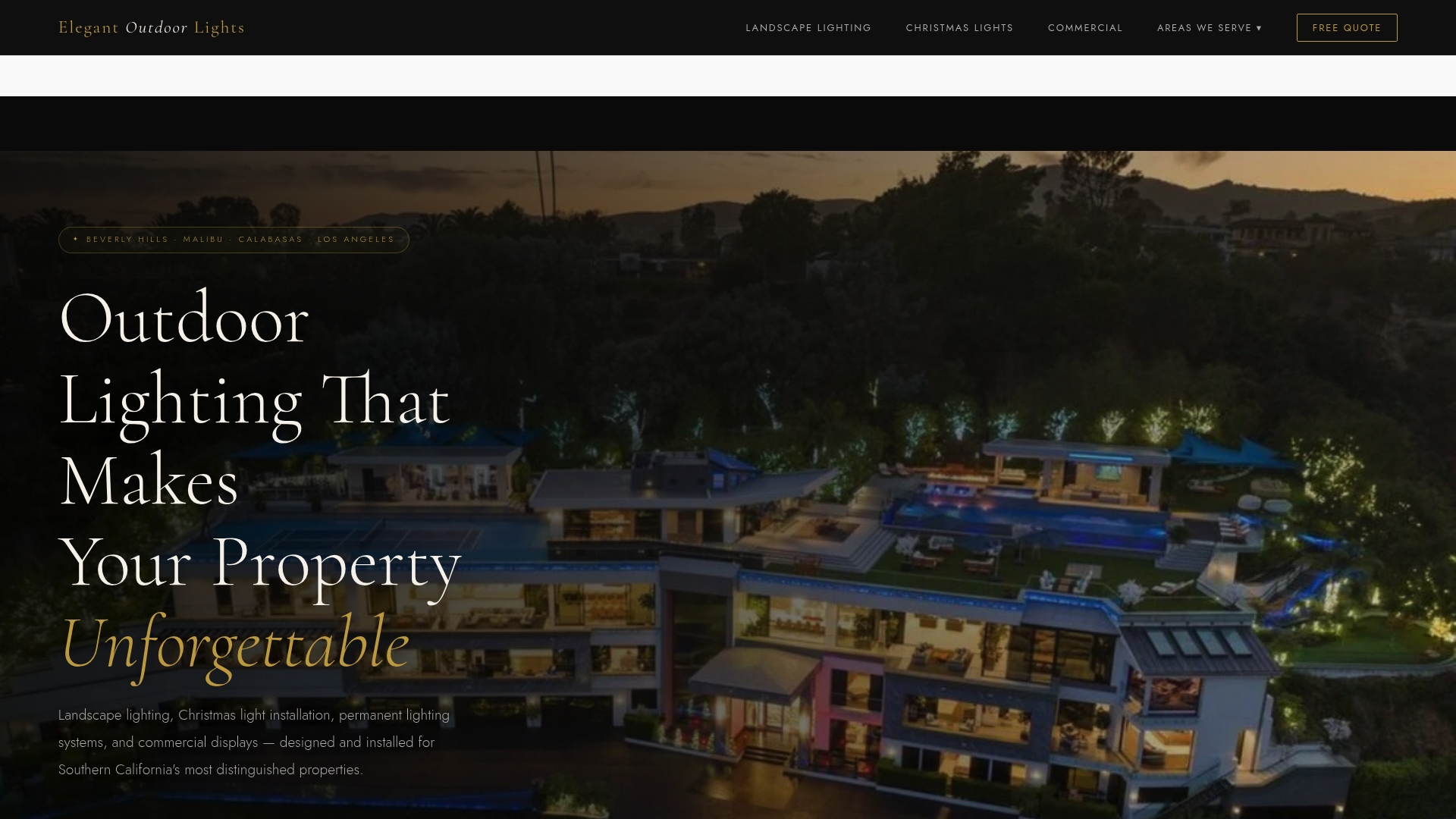
Elegantoutdoorlights specializes in professional landscape lighting design for distinguished residential estates across Los Angeles, including Bel Air, Beverly Hills, Pacific Palisades, and Malibu. Every palm tree lighting project is custom-designed at dusk, using commercial-grade fixtures selected for both visual impact and long-term durability in coastal conditions.
Whether you have a single specimen palm or a full tropical garden, the Elegantoutdoorlights team designs each installation to complement your property's architecture and grounds. From fixture specification to final adjustment, every detail is handled with a white-glove approach. Clients in Malibu and Pacific Palisades trust Elegantoutdoorlights to deliver results that hold up season after season. Contact Elegantoutdoorlights today to schedule your custom design consultation.
FAQ
What color temperature is best for palm tree lighting?
The ideal color temperature for palm tree lighting is 2700K warm white. This preserves the natural green of the fronds and creates a warm, tropical atmosphere at night.
Are ring lights better than ground uplights for tall palms?
Yes. For palms above 20 feet, ring lights deliver uniform 360-degree coverage that ground uplights cannot match due to intensity loss over distance.
What beam angle should i use for palm tree uplighting?
Use a narrow 25–40 degree beam angle to focus light on the fronds and avoid scattering. Wider beams above 100 degrees reduce perceived brightness on the tree and spill light onto surrounding surfaces.
What fixtures work best in coastal climates like malibu?
Choose fixtures rated IP66 with 304-grade stainless steel construction. Standard aluminum housings corrode quickly in salt air, while rated materials extend fixture life well beyond 50,000 hours.
Can palm tree lighting be programmed for different seasons or events?
Yes. LED floodlights and ring lights compatible with DMX512 control systems support programmable effects, dimming schedules, and color shifts without any rewiring.