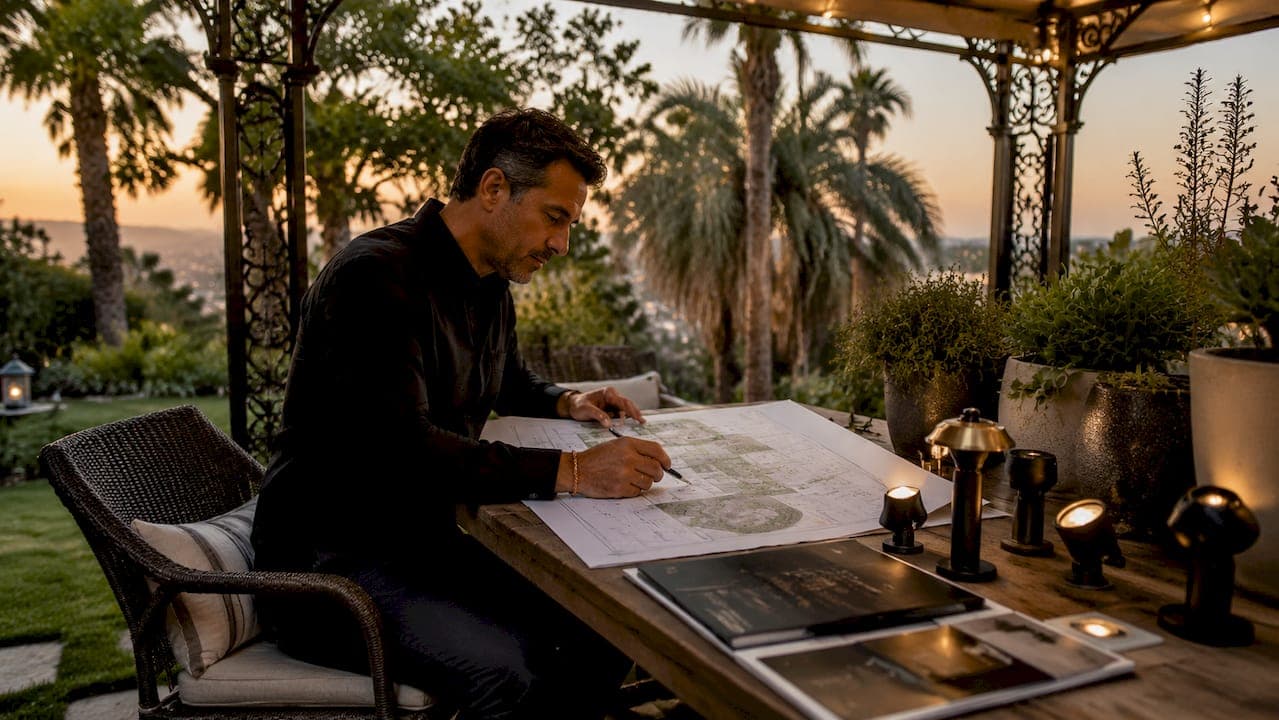
A landscape lighting phased rollout is a strategic, multi-stage installation method where the complete outdoor lighting system is designed upfront but installed incrementally over time. The industry term for this approach is phased installation lighting, and it differs fundamentally from ad hoc additions. Rather than installing everything at once or adding fixtures randomly as budgets allow, a phased rollout follows a deliberate sequence: infrastructure first, then functional lighting, then decorative and ambiance layers. For Los Angeles property owners managing large estates in Bel Air, Pacific Palisades, or Malibu, this method balances design integrity with financial reality.
What is a landscape lighting phased rollout, phase by phase?
A phased rollout follows a 4–5 stage sequence that moves from underground infrastructure to finished ambiance lighting. Each stage builds on the last, and skipping the order creates problems that cost far more to fix than to prevent.
Here is how the standard sequence works:
-
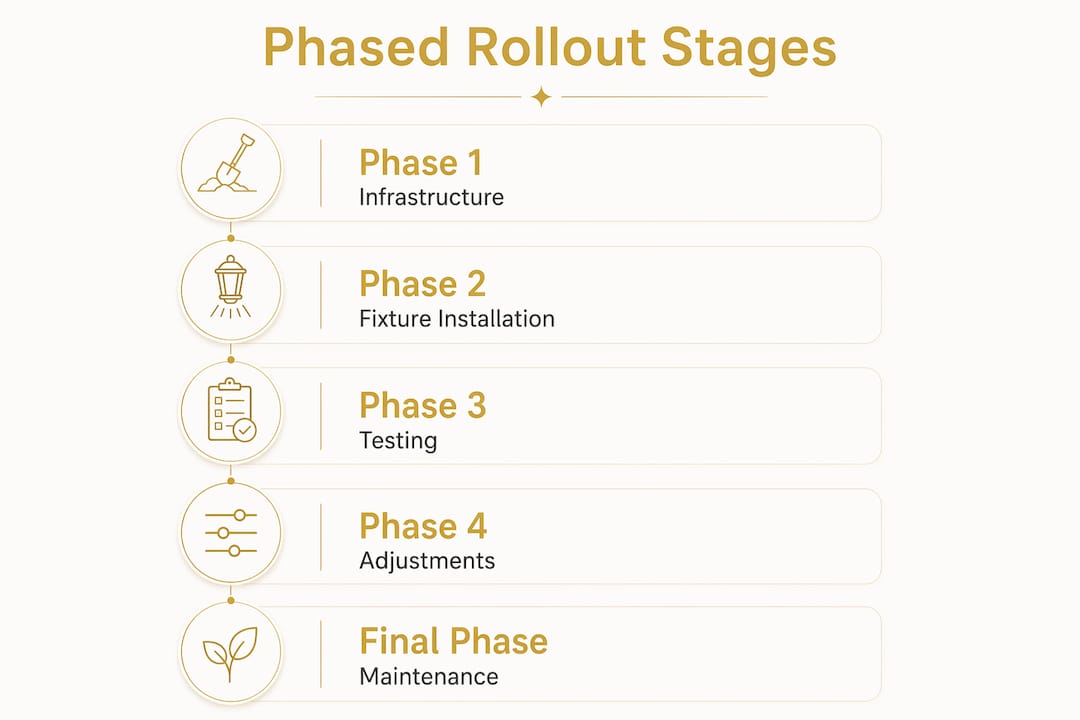
Phase 1: Infrastructure. Transformers, conduit, and main wiring runs are installed before any fixtures go in. This is the most critical phase because retrofitting wiring after patios, gardens, or hardscape are established can double or triple labor costs. Every future phase depends on what you bury in the ground today.
-
Phase 2: Security and Pathway Lighting. Driveways, entry gates, walkways, and perimeter zones get lit first. This phase addresses roughly 60% of a property's functional lighting needs, making the property safe and usable immediately. For estates in Beverly Hills or Bel Air, this phase also delivers immediate curb appeal.
-
Phase 3: Accent and Architectural Lighting. Trees, facades, garden features, and specimen plantings receive uplighting, downlighting, and grazing fixtures. This is where the property's character comes to life after dark. Palm trees, mature oaks, and architectural details on the home's exterior are typical targets in this phase.
-
Phase 4: Ambiance and Smart Controls. Backyard entertaining areas, pool surrounds, outdoor kitchens, and pergolas get their lighting. Smart control systems, including app-based dimmers and programmable schedules, are integrated here. This phase transforms a functional property into a fully realized outdoor living space.
-
Phase 5: Commissioning and Refinement. A professional designer walks the property at dusk, adjusts fixture angles, fine-tunes color temperatures, and confirms every zone performs as designed.
| Phase | Focus Area | Typical Timeline |
|---|---|---|
| 1: Infrastructure | Transformers, conduit, main wiring | Week 1–2 |
| 2: Security and Pathways | Entry, driveways, perimeter | Weeks 2–4 |
| 3: Accent Lighting | Trees, facades, garden features | Months 2–4 |
| 4: Ambiance and Controls | Entertaining areas, smart systems | Months 4–8 |
| 5: Commissioning | Final adjustments, full system test | After each phase |
Some phases take 1–2 weeks while others are spaced across months or seasons. That flexibility is precisely what makes phased installation practical for large Los Angeles properties.
Why master planning makes or breaks a phased rollout
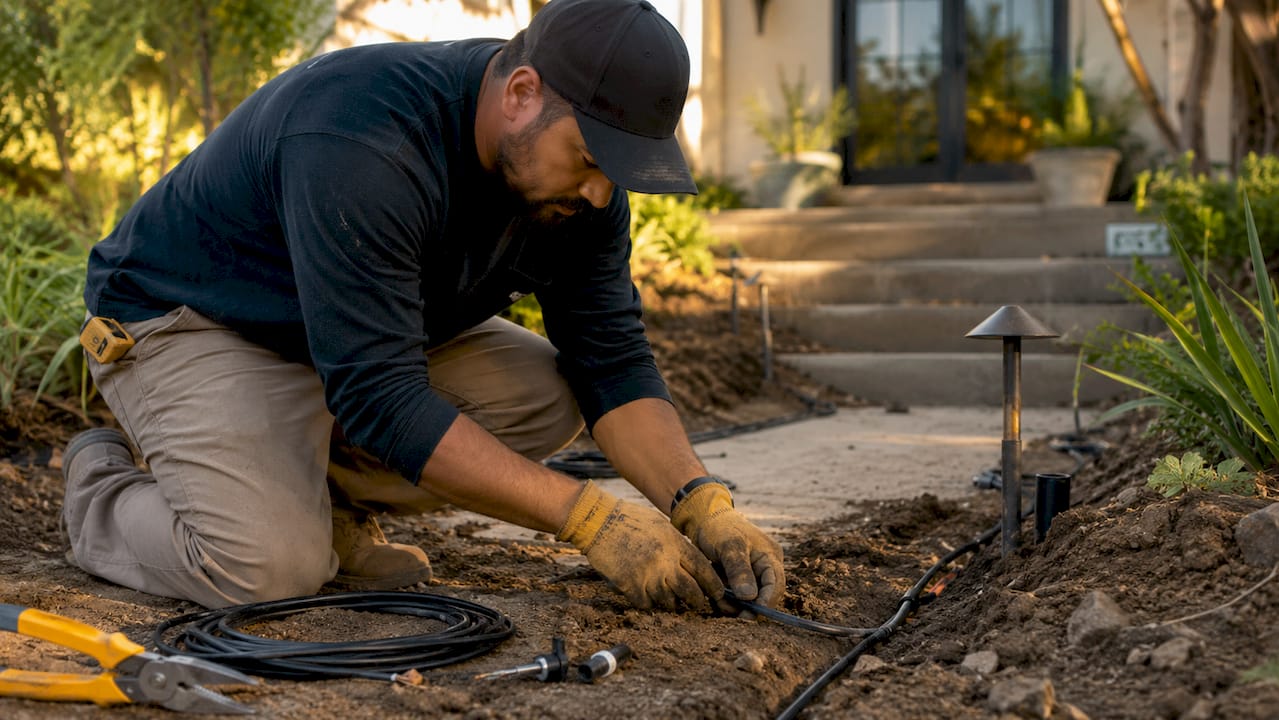
A master plan is the complete lighting design for the entire property, created before a single fixture is installed. Skipping this step leads directly to scope creep, mismatched fixtures, and transformer capacity problems that require expensive rework.
The most common mistake is sizing the transformer only for Phase 1. When Phase 3 adds 20 more fixtures, the system overloads and the transformer must be replaced. A proper master plan sizes the transformer and wiring for the final build from day one, even if only a fraction of the fixtures are installed initially.
Key elements a master plan must address:
- Total fixture count and wattage for all planned phases, not just the first
- Transformer capacity sized to the full system load, with room for future LED upgrades
- Conduit routing mapped for every zone, including areas that won't be lit for years
- Permit documentation covering the entire system to avoid mid-project revisions
- Fixture specifications that maintain consistent color temperature and style across phases
Maintaining an official master plan with proper permits for the entire system prevents scope creep and costly mid-project changes. In Los Angeles, permit revisions triggered by scope creep can delay projects by weeks and add significant fees.
Pro Tip: Review your power load planning before finalizing Phase 1. Knowing your total wattage target lets you select the right transformer size from the start, which saves money across every subsequent phase.
Benefits and challenges of phased landscape lighting installation
Phased installation lighting offers real advantages, but it also comes with trade-offs that every property owner should understand before committing to the approach.
The clear benefits
Phased installation offers budget adaptability and the ability to stage work around seasons, making large projects manageable without sacrificing the final vision. You can invest $15,000 in Phase 1 and 2, live with the results for six months, and then allocate another $20,000 for Phases 3 and 4 when the budget allows.
Living with each phase also reveals real preferences. You may discover that a particular tree looks better lit from two angles instead of one, or that a pathway needs more fixtures than the original plan specified. Testing utility and satisfaction after each phase lets you refine the design before committing to the next round of fixtures.
Modular low-voltage 12V systems are the technical backbone of successful phased rollouts. These systems use main trunk lines with tap-off points, so adding fixtures in Phase 3 requires no major rewiring. Portfolio Lighting and similar manufacturers design their systems specifically for this kind of expansion.
The real challenges
| Challenge | Impact | Solution |
|---|---|---|
| All infrastructure must go in Phase 1 | Higher upfront cost | Budget for full conduit and wiring from the start |
| Scope creep risk | Permit issues, overloaded transformers | Lock the master plan before breaking ground |
| Fixture consistency across years | Mismatched styles or color temperatures | Specify all fixtures in the master plan upfront |
| Disruption during later phases | Disturbs established plantings | Plan conduit routes through garden beds early |
Pro Tip: Lock your infrastructure but keep fixture choices flexible. Conduit and wiring should be finalized in Phase 1, but you can wait to select specific fixture models until each phase begins. This lets you take advantage of newer LED technology as it becomes available.
How to plan a phased rollout for los angeles properties
Los Angeles properties present specific conditions that shape how a phased outdoor lighting rollout should be sequenced and managed. The mild climate means year-round installation is possible, but fire season, drought-resistant landscaping, and the architectural diversity of neighborhoods like Pacific Palisades and Malibu all influence design decisions.
Here is a practical approach for LA property owners and designers:
-
Start with a dusk walkthrough. Walk the property at dusk with your lighting designer before any plans are drawn. Observe how natural light fades, where shadows fall, and which architectural features deserve attention. This single step produces better designs than any daytime assessment.
-
Prioritize security in Phase 2. Los Angeles properties with long driveways, gated entries, and hillside terrain need reliable perimeter and pathway lighting before any decorative work begins. Security lighting also supports smart home integrations that many LA estates already use.
-
Coordinate with your landscape contractor. If hardscape work is planned, schedule lighting infrastructure installation at the same time. Trenching through an existing flagstone patio costs far more than running conduit before the patio is poured.
-
Check local permit requirements early. Los Angeles city and county have specific requirements for outdoor electrical work. Scope creep can trigger permit revisions or invalidate final inspections if additional loads exceed the permitted circuit design. Work with a licensed contractor who knows local codes.
-
Plan around mature plantings. Many Bel Air and Beverly Hills estates have mature trees and established gardens. Conduit routes must account for root systems and future plant growth. A designer familiar with palm tree lighting and specimen tree uplighting will know how to route wiring without damaging roots.
-
Test each phase at night before approving it. Walk the property after dark with your installer. Adjust fixture angles, check for glare, and confirm that light levels feel right before signing off. What looks correct on paper often needs fine-tuning in the field.
Professional designers recommend planning all infrastructure upfront even when fixtures will be added years later. This single discipline separates successful phased projects from expensive, frustrating ones.
Key takeaways
A successful landscape lighting phased rollout requires a complete master plan and full infrastructure installation before the first fixture is ever placed.
| Point | Details |
|---|---|
| Infrastructure comes first | Install transformers, conduit, and wiring in Phase 1 to avoid costly retrofits later. |
| Master plan is non-negotiable | Design the full system before starting to prevent scope creep and permit problems. |
| Modular 12V systems enable growth | Low-voltage trunk-and-tap systems let you add fixtures without rewiring existing runs. |
| Phased testing improves results | Living with each phase reveals real preferences and allows smart design refinements. |
| LA conditions shape sequencing | Coordinate with hardscape work, check local permits early, and prioritize security lighting first. |
What i've learned after years of phased lighting projects
The biggest mistake I see on large Los Angeles estates is treating a phased rollout as permission to figure it out later. Homeowners hear "phased" and assume it means flexible. It does, but only for fixtures. The infrastructure has to be decided, designed, and installed as if the entire project is happening tomorrow.
I've walked properties where Phase 1 was completed beautifully, and then the homeowner wanted to add 30 fixtures in Phase 3 only to discover the transformer was already at 90% capacity. That's an expensive conversation. The transformer replacement, the disruption to established plantings, the permit amendment. All of it avoidable with a proper master plan.
The other thing I've observed specifically in California is that fire-resistant landscaping trends are changing what Phase 3 looks like. Drought-tolerant gardens with decomposed granite, succulents, and native plantings require different fixture placement and beam angles than traditional lush gardens. A designer who hasn't updated their approach for these conditions will produce Phase 3 results that feel disconnected from the property's current character.
The good news is that phased testing genuinely works. Clients who live with Phase 2 for a season almost always come back with better ideas for Phase 3. They know which corner of the garden they actually use at night, which tree deserves a second fixture, and which pathway light is too bright. That feedback makes the final system far better than anything designed entirely on paper.
— Chris
Transform your property with a custom phased lighting plan
Elegantoutdoorlights specializes in landscape lighting design and installation across Los Angeles, including Bel Air, Beverly Hills, Pacific Palisades, Malibu, and surrounding neighborhoods. Every project begins with a complete master plan designed at dusk, so your infrastructure is sized correctly from day one and every future phase connects without compromise.
Whether you are starting Phase 1 on a new estate or adding accent lighting to an existing system, Elegantoutdoorlights delivers the white-glove experience your property deserves. Our team handles design, permitting guidance, installation, and ongoing maintenance across all phases. Contact Elegantoutdoorlights to schedule your custom phased lighting consultation and see what your property looks like after dark.
FAQ
What is a landscape lighting phased rollout?
A landscape lighting phased rollout is a planned, multi-stage installation process where the full lighting system is designed upfront but installed in sequential phases over time. The standard sequence covers infrastructure, security and pathways, accent lighting, ambiance, and final commissioning.
How many phases does a typical outdoor lighting rollout have?
Most residential phased rollouts follow 4–5 stages, with some phases completed in 1–2 weeks and others spaced months apart depending on budget and project scope.
Why does infrastructure have to be installed in phase 1?
Retrofitting wiring, conduit, and transformers after patios or established gardens are in place can double or triple labor costs. Installing all underground infrastructure in Phase 1 protects every future phase from expensive disruption.
What type of lighting system works best for phased installation?
Modular low-voltage 12V systems are the best fit for phased rollouts. They use main trunk lines with tap-off points, allowing new fixtures to be added in later phases without rewiring the existing system.
Do i need permits for a phased landscape lighting project in los angeles?
Yes. Los Angeles requires permits for outdoor electrical work, and adding fixtures beyond the original permitted scope can trigger revisions or inspection failures. A complete master plan submitted at the start keeps all phases within the approved design.