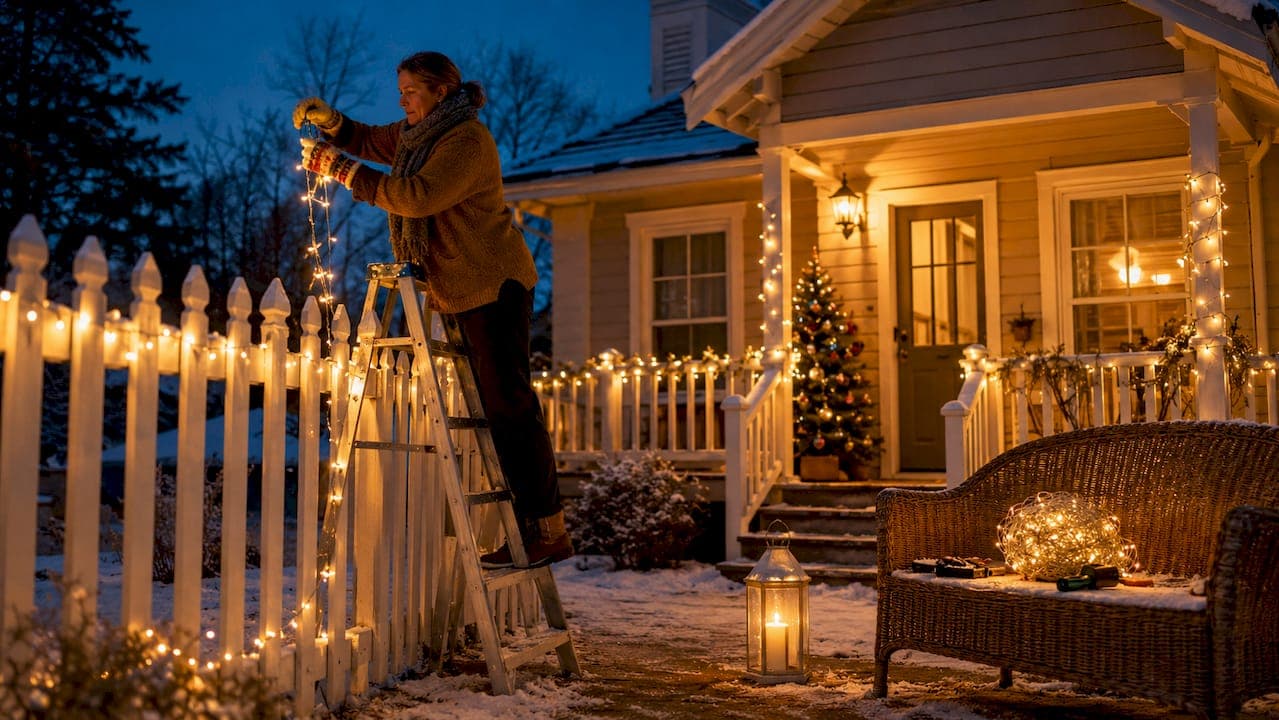
Outdoor Christmas light styles refer to the distinct lighting types and design approaches used to decorate a home's exterior for the holiday season, from classic string lights and icicle lights to commercial-grade retrofit C9 bulbs. The style you choose shapes your home's entire seasonal identity. A roofline wrapped in warm white C9s reads very differently than a shrub draped in net lights. Knowing the difference between each style, and how to layer them, is what separates a polished estate display from a tangled mess of extension cords.
1. Top outdoor Christmas light styles every homeowner should know
String lights are the most versatile holiday lighting option available. You can run them along rooflines, wrap them around railings, or drape them through tree canopies. They come in dozens of bulb shapes, from classic C6 to large G50 globes, and work equally well for casual and formal displays.
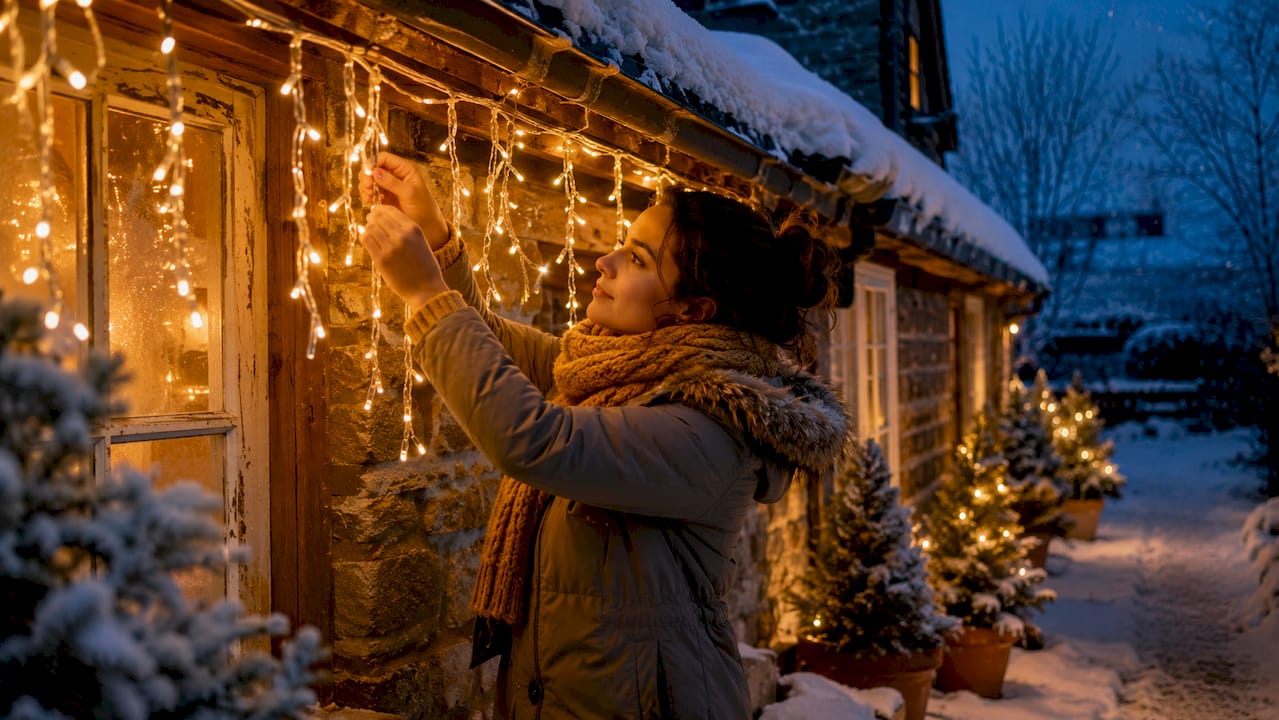
Icicle lights hang in cascading vertical strands from eaves and gutters. They create a classic, wintry silhouette that reads beautifully from the street. The effect works best on homes with long, uninterrupted rooflines.
Net lights are the fastest way to cover low shrubs and hedges evenly. You simply lay the pre-spaced grid over the plant and plug it in. They eliminate the uneven gaps that come from hand-wrapping individual branches.
Rope lights are flexible tubes with LEDs running through a clear or colored casing. They work well as architectural accents along pathways, steps, and fence lines. Their low profile keeps the focus on the structure rather than the light source itself.
Retrofit C9 bulbs are the professional standard for architectural framing. Retrofit C9 lines allow custom spacing and can be cut to length, unlike stringer-style sets that force fixed intervals. That flexibility is why estate installers use them almost exclusively on rooflines and major focal points.
Pathway lights on stakes guide visitors from the street to your front door. Stake height matters: use 15-inch stakes in snow-prone climates and 4.5-inch stakes in mild regions like Los Angeles or Malibu. Taller stakes keep the light visible above accumulated snow.
Battery-operated lights solve the problem of decorating areas far from an outlet. They work well on wreaths, potted topiaries, and freestanding decorative pieces. The tradeoff is battery replacement, so reserve them for accent positions rather than primary display runs.
Pro Tip: Mix at least two string light styles in any display. Pair a fine-gauge C6 string for definition with a larger G12 globe string for texture. The contrast creates depth without adding more total lights.
2. Consumer-grade vs. commercial-grade outdoor lights
The difference between consumer and commercial-grade lights is not just price. It is brightness, weather resistance, and how long the display actually lasts.
Commercial-grade C9s feature IP67 waterproof ratings and 3–5 diodes per bulb, compared to the single diode in most consumer sets. More diodes per bulb means dramatically more output and a longer usable life. Consumer lights typically carry IP65 ratings, which handle rain but not sustained water immersion.
| Feature | Consumer-grade | Commercial-grade |
|---|---|---|
| IP rating | IP65 | IP67 |
| Diodes per bulb | 1 | 3–5 |
| Bulb material | Plastic | Acrylic |
| Base material | Standard | Corrosion-resistant nickel |
| Warranty | 1–3 seasons | 3–10 years |
| Best for | Short-term use | Permanent or annual install |
Premium commercial sets carry warranties of up to 10 years, while budget options often fail within 1–3 seasons. For a single-season display, consumer lights are acceptable. For a property you decorate every year, commercial-grade pays for itself within two or three seasons.
Corrosion-resistant nickel bases are critical for coastal properties in places like Malibu or Pacific Palisades. Salt air degrades standard metal bases quickly. Commercial-grade lights are built to survive that environment without corroding at the socket.
Pro Tip: Check the IP rating before you buy, not after the first rainstorm. IP67 is the minimum worth specifying for any light that will be mounted outdoors for more than a few weeks.
3. How to layer light styles for a polished holiday display
Layering is the single design principle that separates a professional display from a DIY one. The goal is depth, not density.
Start with neutral warm white tones as your foundation. Warm white reads as timeless and elegant from the street. Once that base is in place, you can add color or animation as accents without the display looking chaotic.
Here is a layering sequence that works for most homes:
- Roofline first. Frame the roofline and major architectural edges with retrofit C9s. Architectural framing with C9 lights creates a glowing outline that defines the home's silhouette more powerfully than any other single technique.
- Trees second. Wrap trunks and major branches only. Using C6 bulbs for definition and G12 globes for texture creates a layered, high-end look without oversaturating every branch.
- Ground level third. Add pathway lights, net lights on shrubs, and any decorative motifs. Group motifs in odd numbers. Three illuminated deer read as a natural scene; four read as a row.
- Animation last. If you use animated or color-changing lights, limit them to one zone. A single animated focal point adds drama. Animation everywhere creates visual noise.
Visible extension cords are the most common mistake that kills curb appeal. Use cords that match your landscape color, tuck them behind shrubs, and run them along fence lines rather than across open lawn. A display that looks expensive from the street almost always has invisible infrastructure behind it.
For a deeper comparison of professional versus DIY approaches, the string lights vs. professional lights guide from Elegantoutdoorlights covers the practical tradeoffs in detail.
4. Specialty outdoor lighting styles: pathways, smart systems, and decorative accents
Specialty lighting options have expanded significantly for 2026, and the best ones do more than just add light. They add control, character, and a sense of occasion.
Smart outdoor lighting systems now offer app control, voice assistant integration with Alexa and Google Home, music sync, and over 64 preset scenes. Systems with dual-output and app control allow you to shift from a warm white holiday display to a full-color celebration scene in seconds. That kind of flexibility makes a permanent install feel seasonal without requiring a full reinstall each year.
Decorative accent options worth considering:
- Illuminated stars and geometric shapes. Mount them at roofline peaks or in large trees as focal points. They draw the eye upward and give the display a clear visual anchor.
- Giant globe clusters. Oversized G80 or G95 globes hung in groupings create a warm, festive glow that photographs beautifully and reads well from the street.
- Luminarias. Paper or LED bag luminarias along a driveway or walkway create a soft, welcoming path of light. They work especially well for holiday gatherings.
- Projector light displays. Laser and LED projectors cast patterns across the facade of a home without any physical installation on the structure. They are a strong option for renters or for homeowners who want a dramatic effect without permanent hardware.
- Permanent architectural lighting. Year-round LED systems installed in soffits or along eaves can be programmed for holiday colors. Elegantoutdoorlights installs these systems across estates in Bel Air, Beverly Hills, and Pacific Palisades, where homeowners want a polished look every season without annual reinstallation.
Pro Tip: Integrate specialty lights as accents, not replacements. A projector display works best when it complements a lit roofline, not when it stands alone on a dark facade.
5. Choosing the right light style for your home's architecture and climate
The right holiday lighting style depends on your home's structure as much as your personal taste. A Spanish Colonial in Pacific Palisades calls for a different approach than a modern glass-and-steel home in Beverly Hills.
Key considerations by home type and climate:
- Large estates with defined rooflines benefit most from retrofit C9 architectural framing. The scale of the home demands a light source with enough output to read from a distance.
- Homes with mature trees are ideal candidates for layered string light wrapping. Focus on trunks and primary branches rather than every limb. Restraint creates elegance.
- Coastal properties require IP67-rated lights with corrosion-resistant hardware. Salt air and moisture will degrade standard consumer lights within a single season.
- Snow-prone climates need taller pathway stakes and heavier-gauge wire that stays flexible in cold temperatures. In Los Angeles, this is rarely a concern, but it matters for properties in mountain communities.
- Smaller homes benefit from net lights and fine-gauge string lights that add sparkle without visual weight. Oversized C9s on a small bungalow can look out of proportion.
- LED vs. incandescent: LED Christmas lights use significantly less energy than incandescent equivalents and last far longer. For large estates with hundreds of linear feet of lighting, the energy savings are substantial. For a look at how exterior wall lighting choices affect the overall design, the architecture of the home is always the starting point.
The most common mistake is choosing a light style based on what looks good in a store display rather than what suits the actual structure. Walk your property at dusk before you buy anything. Identify the architectural features worth highlighting, and let those guide your style choices.
Key takeaways
The most effective outdoor holiday displays combine commercial-grade LED lights, architectural framing with retrofit C9s, and layered bulb sizes to create depth, durability, and genuine curb appeal.
| Point | Details |
|---|---|
| Use commercial-grade lights | IP67-rated lights with multi-diode bulbs last 3–10 years and outperform consumer sets in wet climates. |
| Frame architecture first | Retrofit C9s along rooflines define the home's silhouette more powerfully than shrub wrapping. |
| Layer by zone, not density | Start with warm white tones, add trees, then ground level, then animation as a final accent. |
| Match style to structure | Large estates need C9s; small homes suit fine-gauge strings; coastal properties require corrosion-resistant hardware. |
| Hide the infrastructure | Landscape-colored cords and concealed runs are what make a display look professionally installed. |
What I've learned from designing estate holiday displays
After working on holiday lighting installations across some of Los Angeles's most distinguished properties, the pattern I keep seeing is the same. Homeowners who invest in the right light style for their architecture always end up happier than those who buy the most lights.
The shift toward commercial-grade retrofit C9s in residential settings is real and accelerating. Homeowners who have experienced a professionally installed C9 roofline do not go back to consumer string sets. The brightness difference is visible from two blocks away, and the display holds up through rain, wind, and weeks of continuous use without a single bulb failure.
The mistake I see most often is treating holiday lighting like a volume problem. More lights, more colors, more motion. The displays that actually stop traffic are the ones that use restraint. A single, perfectly framed roofline in warm white, with clean tree wrapping and concealed cords, looks more expensive than a yard full of competing elements.
Smart lighting systems are genuinely useful for homeowners who want year-round flexibility. The ability to shift from a holiday scene to a standard warm white setting without touching a single fixture is a real quality-of-life improvement. For permanent installs, I recommend specifying systems with at least 64 preset scenes and full app control from the start. Retrofitting that capability later costs more than building it in.
The one thing I tell every client: walk your property at dusk before you plan anything. The architecture tells you exactly what it needs. Your job is to listen to it.
— Chris
Transform your home with professional holiday lighting from Elegantoutdoorlights
Choosing the right light style is only half the equation. Installation quality determines whether a display looks polished or improvised.
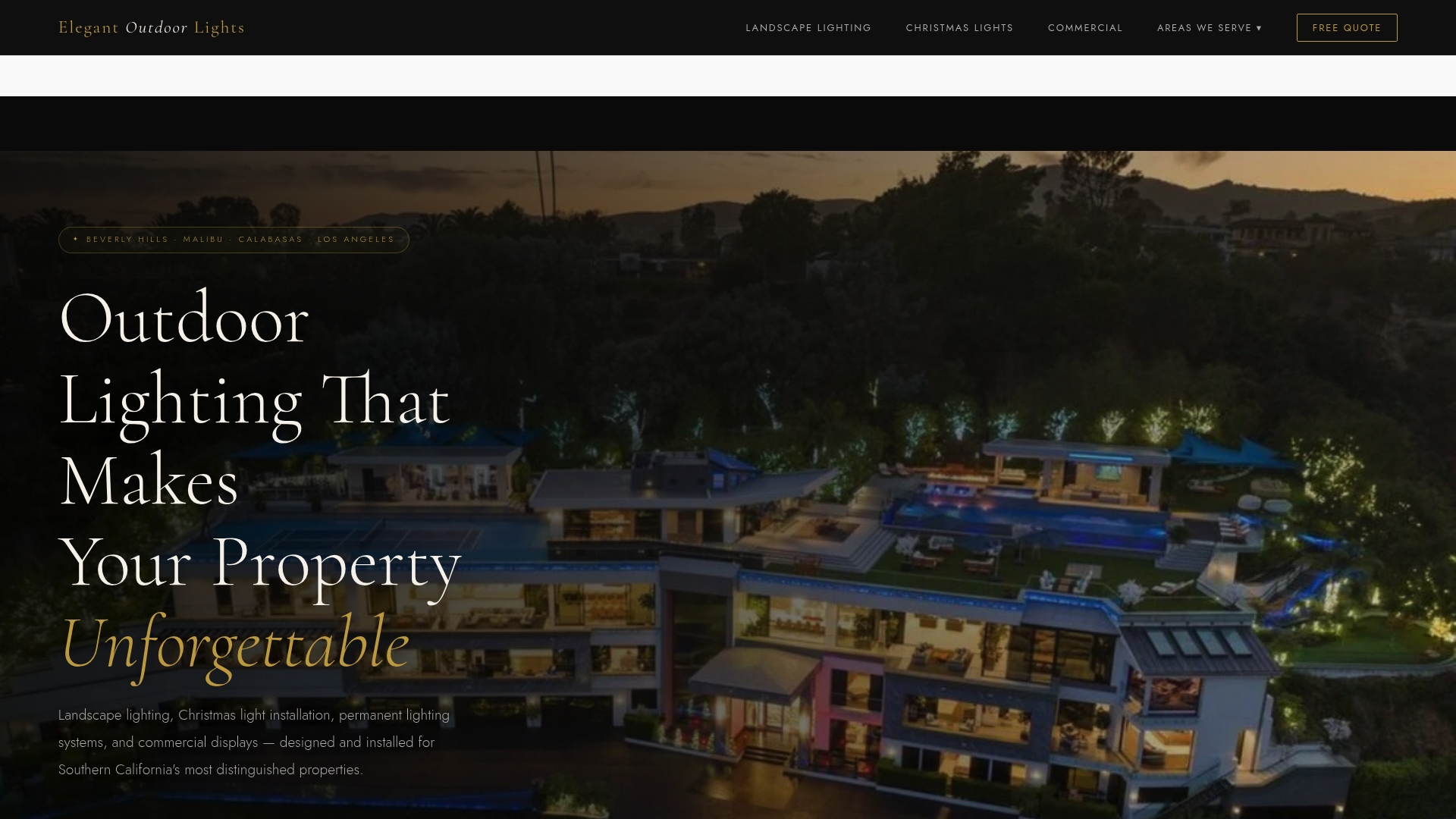
Elegantoutdoorlights designs and installs bespoke holiday lighting for estates across Los Angeles, from Bel Air and Beverly Hills to Malibu and Pacific Palisades. Every display is custom-designed at dusk, installed with commercial-grade materials, and removed and stored at season's end. If you want a professional Christmas light installation that reflects the quality of your property, Elegantoutdoorlights delivers a white-glove experience from first design consultation to final takedown. Contact the team to schedule your custom design consultation for the 2026 holiday season.
FAQ
What are the most popular outdoor Christmas light styles?
String lights, icicle lights, and retrofit C9 bulbs are the most widely used outdoor holiday lighting styles. Each serves a different purpose: string lights for versatility, icicle lights for roofline drama, and C9s for architectural framing.
What is the difference between IP65 and IP67 lights?
IP65 lights resist water spray, while IP67 lights withstand full submersion for short periods. For outdoor holiday displays in wet or coastal climates, IP67 is the more durable and reliable specification.
How do I make outdoor Christmas lights look professional?
Frame your roofline with retrofit C9 bulbs, layer bulb sizes across trees and shrubs, and conceal all extension cords using landscape-colored runs. Grouping decorative motifs in odd numbers and hiding infrastructure are the two details that most distinguish a professional display from a DIY one.
Are LED Christmas lights better than incandescent?
LED Christmas lights use significantly less energy than incandescent bulbs and last far longer. For large properties with hundreds of linear feet of lighting, the energy savings are substantial over a full season.
How do smart outdoor lighting systems work for holiday displays?
Smart outdoor lighting systems connect via app and voice assistants like Alexa, offering preset scenes, music sync, and color control. They allow you to switch between holiday and everyday settings without reinstalling any hardware.