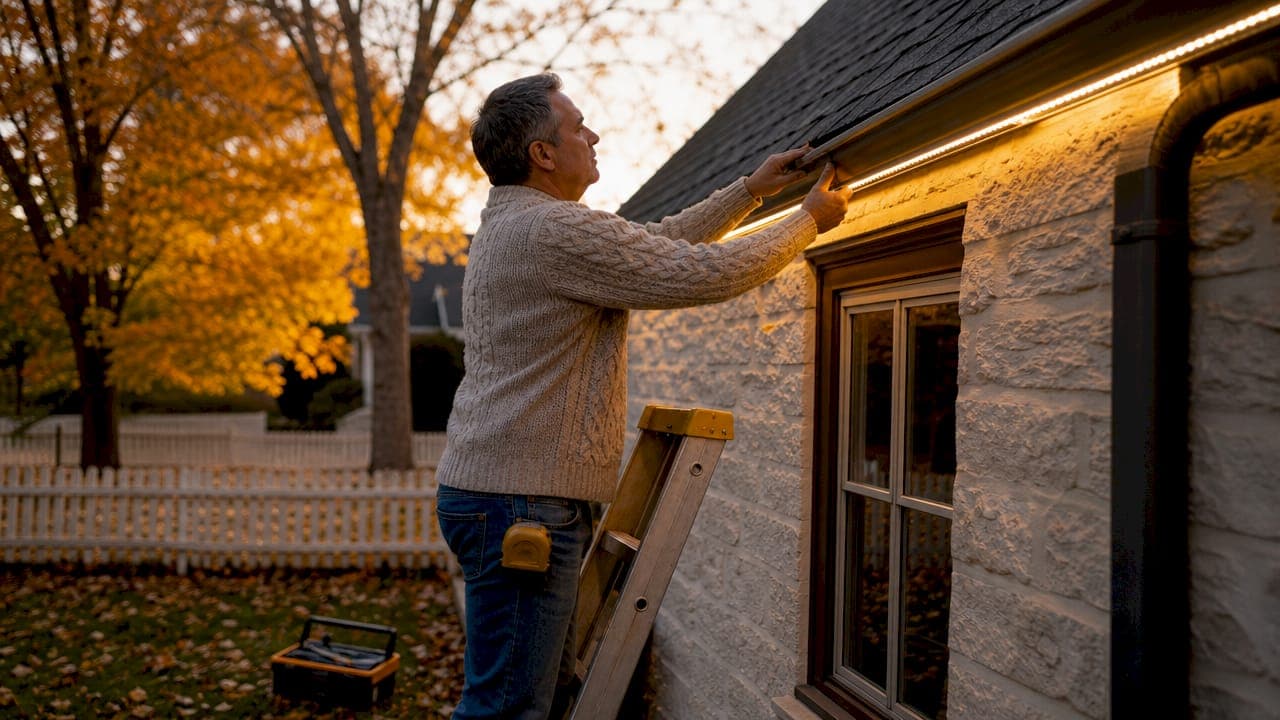
Permanent holiday lighting systems are LED lighting installations that stay mounted year-round on your home's exterior rooflines, controlled by a smartphone app to change colors, patterns, and schedules on demand. Unlike temporary strands you wrestle down every january, these systems are installed once and remain mounted permanently inside protective aluminum channels. The industry term for this category is "architectural permanent lighting," and it represents a meaningful shift in how homeowners approach festive and year-round curb appeal. This guide covers every component, installation option, cost factor, and long-term benefit you need to make a confident decision.
What components make up permanent holiday lighting systems?
Permanent holiday lighting systems consist of four core components: LED strips, aluminum channels, a controller, and a power supply. Each part plays a specific role, and understanding them helps you evaluate any installation proposal with confidence.
LED strips with RGBWW technology are the light source. RGBWW LEDs use five LED types per segment, combining red, green, blue, warm white, and cool white diodes. That combination produces both vibrant holiday colors and natural-looking whites for everyday use. Each LED node is individually addressable, meaning the controller can light each one independently to create gradients, chase effects, and animations.
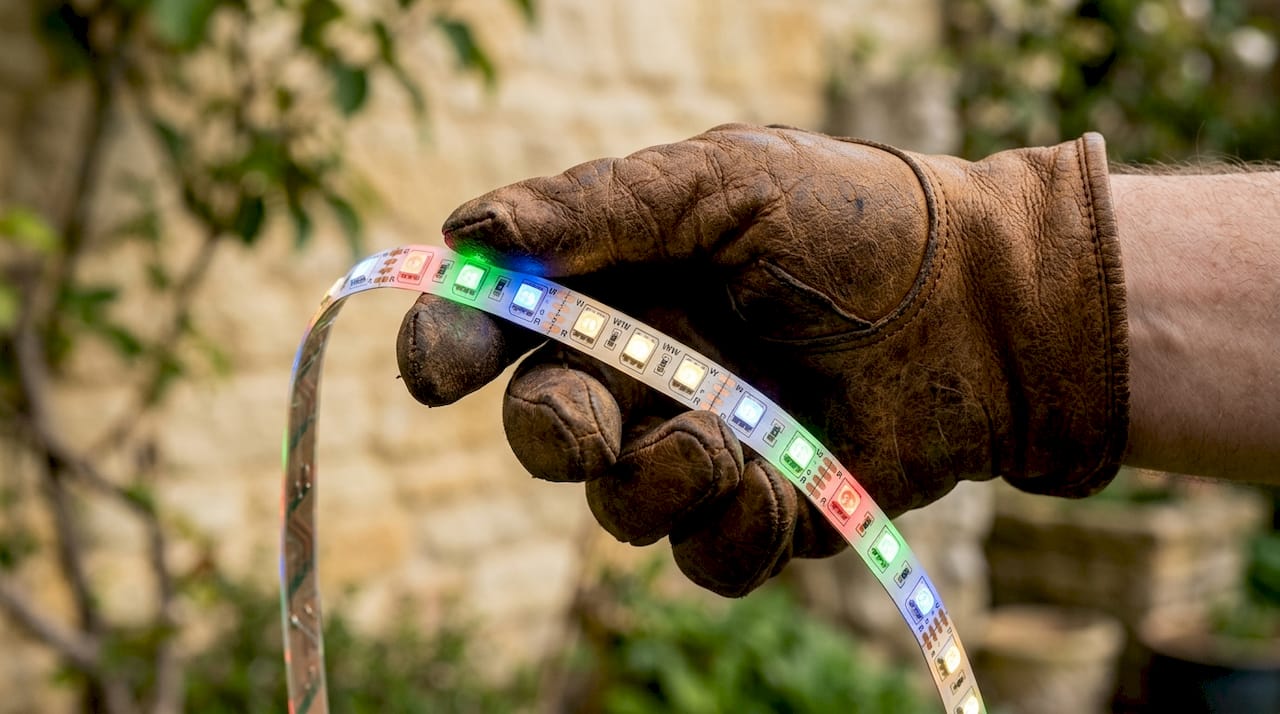
Aluminum channels do more than hold the strips in place. The channel is an extruded aluminum housing with a frosted polycarbonate lens that protects LEDs from weather and diffuses light evenly downward. Color-matched channels blend with your home's trim during the day, making the system nearly invisible when the lights are off.
The controller is the brain of the system. It connects to your home WiFi and pairs with a smartphone app, but schedules are stored locally on the device itself. That means your lights follow their programmed schedule even if your router goes offline.
Power supplies convert standard 120V household current to low-voltage DC, typically 12V, 24V, or 48V. Lower voltage is safer for outdoor use and protects the LEDs from power surges. The voltage rating also affects brightness consistency across long roofline runs, which matters more than most homeowners expect.
- RGBWW LED strips for full-color and white output
- Frosted aluminum channels for weather protection and light diffusion
- WiFi controller with local schedule storage for reliability
- Low-voltage DC power supply (12V, 24V, or 48V) for safety
Pro Tip: Ask your installer which voltage system they use. A 48V system maintains consistent brightness across runs longer than 50 feet, while 12V systems can show dimming at the far end of long rooflines.
What installation options and design styles are available?
The installation method and design choices you make at the start determine how your system looks and performs for years. Two primary installation approaches exist: mechanical fastening and adhesive-only mounting.
Mechanical fastening vs. adhesive-only mounting
Mechanical fastening uses stainless steel screws to anchor aluminum channels directly into soffits or fascia boards. This method holds through high winds, heavy rain, and HOA inspections. Adhesive-only mounting uses industrial tape or clips and is faster to install, but it degrades in heat and UV exposure. For California homes in Malibu or Pacific Palisades where sun and salt air are constant, mechanical fastening is the clear choice for longevity.
How the installation process works
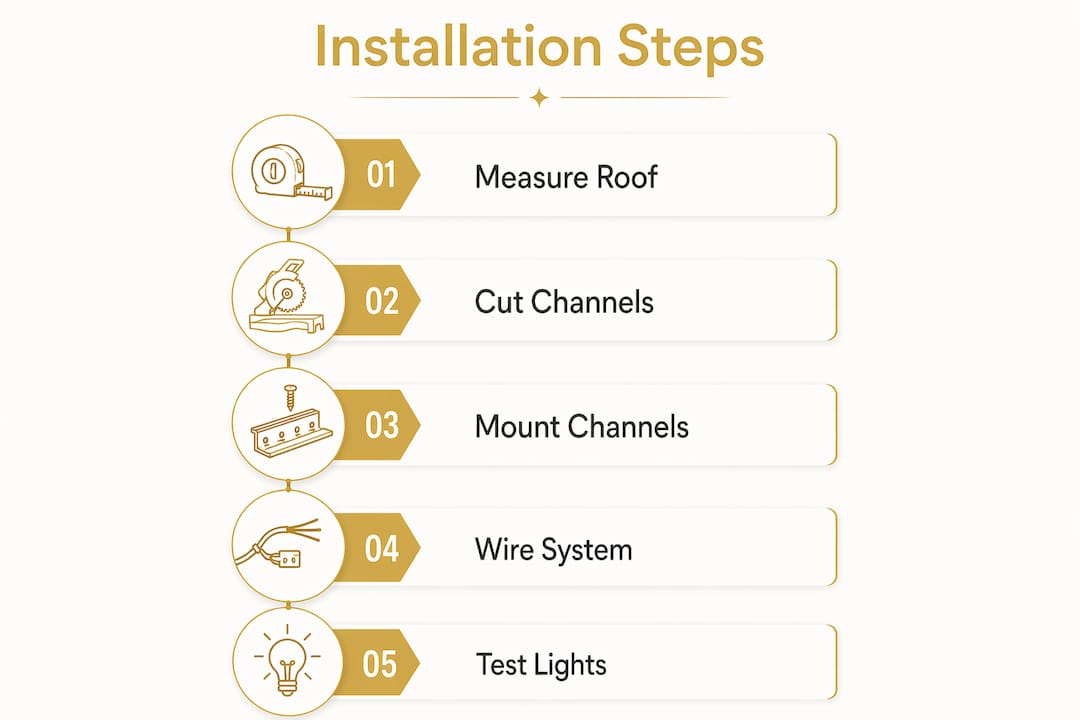
Professional installation typically takes 4–7 hours: 3–5 hours for measuring, cutting, and mounting channels, then 1–2 hours for wiring and seating the LED strips. The most labor-intensive step is fitting channels to complex rooflines with angles, valleys, and dormers. Precise mitering at corners determines whether the finished result looks architectural or amateurish.
- Measure the full roofline perimeter and identify all angles and transitions
- Cut and miter aluminum channels to fit each roofline segment exactly
- Fasten channels mechanically to soffits or fascia with color-matched hardware
- Run low-voltage wiring from channels back to the power supply location
- Seat LED strips inside channels and connect to the controller
- Program the controller and test all zones through the app
Pro Tip: Request a daytime walkthrough after installation. Color-matched channels should be nearly invisible against your trim. If you can spot them easily from the street, the channel color selection was wrong.
Design style comparison
| Design Feature | Standard Setup | Premium Setup |
|---|---|---|
| LED type | Single-color or RGB | RGBWW individually addressable |
| Channel finish | White or brown stock | Custom color-matched to trim |
| Mounting method | Adhesive clips | Mechanical stainless steel screws |
| Animation capability | Basic on/off | Chase effects, gradients, scene zones |
| Roofline coverage | Front face only | Full perimeter with valleys and dormers |
How much does permanent holiday lighting installation cost?
Installed permanent holiday lighting costs $16–$38 per linear foot, with most homes landing between $2,500 and $6,000 total. That range reflects real differences in roofline complexity, not just material quality.
Three factors drive your final price:
- Roofline footage: A 150-foot perimeter costs significantly more than an 80-foot front-face-only install.
- Roofline complexity: Valleys, dormers, and steep pitches require custom channel cuts and more labor hours.
- Electrical additions: If your home lacks exterior outlets near the roofline, adding them increases cost.
The energy cost is lower than most homeowners expect. Permanent lights cost approximately $4–$5 per month in electricity, less than running a single conventional light bulb continuously. That figure stays consistent year-round because LED draw is minimal even during extended holiday display hours.
The break-even point compared to professional seasonal installation arrives at year 4–5 of ownership. Professional seasonal installs in Los Angeles typically run $800–$2,000 per season for labor alone, not counting replacement bulbs and storage. By year five, a permanent system has paid for itself and continues delivering value with no recurring labor cost.
What are the long-term benefits of permanent holiday lighting?
Permanent outdoor lights deliver advantages that go well beyond convenience. The most significant is safety. LEDs run cooler and last up to 25 times longer than incandescent bulbs. Cooler operation eliminates the fire risk that incandescent strands pose near dry wood fascia and roof materials.
The elimination of ladder use is a benefit homeowners underestimate until they no longer have to climb one. Every december, emergency rooms treat thousands of Americans for ladder-related falls during holiday decorating. A permanent system removes that risk entirely. You control everything from your phone, on the ground.
Year-round functionality is another genuine advantage. The same system that runs red and green in december can display orange and purple in october, red and blue for the Fourth of July, or soft warm white every evening as architectural accent lighting. Permanent lighting represents an architectural approach to home design, not just a seasonal decoration. That framing matters when you consider home value and curb appeal.
"Our clients consistently tell us the biggest surprise is how much they use the lights outside of the holidays. The warm white setting becomes their everyday evening look, and the house looks completely different after dark."
Additional long-term benefits include:
- No annual storage, untangling, or replacement of damaged strands
- HOA compliance through clean, low-profile channel installation
- Weather-resistant construction rated for rain, UV, and temperature swings
- App-based scheduling that automates displays without manual effort
- Professional holiday lighting that maintains consistent quality season after season
Key takeaways
Permanent holiday lighting systems deliver the strongest long-term value when professionally installed with mechanical fastening, RGBWW LEDs, and a voltage-matched power supply sized for your roofline length.
| Point | Details |
|---|---|
| System components | RGBWW LEDs, aluminum channels, a WiFi controller, and a low-voltage power supply work together. |
| Installation method | Mechanical fastening with stainless steel screws outperforms adhesive-only mounting for durability. |
| Total cost range | Most homes cost $2,500–$6,000 installed, with electricity running about $4–$5 per month. |
| Break-even timeline | Permanent systems typically pay for themselves by year 4–5 compared to professional seasonal installs. |
| Year-round value | RGBWW systems display any color for any holiday and serve as everyday architectural accent lighting. |
What I've learned after years of permanent lighting installs
The detail that separates a great permanent lighting installation from a mediocre one is channel fitting. I have seen systems installed with stock-length channels that leave visible gaps at roofline corners, and I have seen systems where every miter is cut so cleanly the channel reads as part of the architecture. The difference is entirely in the measurement and cutting phase, which is also the part most DIY guides rush past.
Voltage selection is the other decision homeowners rarely think about until they see the result. A 12V system on a 120-foot roofline will show visible dimming at the far end. A 48V system on the same run stays uniform. Selecting the right voltage for your specific roofline length is not a minor detail. It determines whether your display looks polished or uneven from the street.
My honest recommendation: do not evaluate proposals based on price per foot alone. Ask how the installer handles inside and outside corners, what voltage system they specify for your roofline length, and whether they use mechanical or adhesive fastening. Those three questions will tell you more about the quality of the finished result than any brochure. When you evaluate outdoor lighting proposals with those criteria, the difference between installers becomes obvious fast.
The app features are also worth exploring beyond the basic holiday presets. Most controllers support scene zones, meaning you can light the front roofline differently from the garage or side returns. That flexibility turns a holiday system into a genuine year-round design element for your home's exterior.
— Chris
Elegantoutdoorlights brings permanent lighting to Los Angeles estates
Elegantoutdoorlights designs and installs permanent holiday lighting systems for distinguished homes across Los Angeles, including Malibu, Studio City, and Pasadena. Every installation is custom-designed to fit your roofline geometry precisely, with factory-direct aluminum channels and mechanical fastening that holds through California weather and HOA inspections.
The team at Elegantoutdoorlights handles complex roofline shapes that standard installers avoid, from multi-gabled estates in Pacific Palisades to modern flat-roof homes in Beverly Hills. App-based control, personalized color programming, and a white-glove installation experience are standard on every project. If you are ready to move beyond temporary strands, explore professional holiday lighting installation options for your home.
FAQ
What is a permanent holiday lighting system?
A permanent holiday lighting system is a professionally installed LED setup mounted year-round on a home's roofline inside aluminum channels, controlled by a smartphone app to change colors and schedules for any season.
How long does permanent holiday lighting installation take?
Most installations take 4–7 hours total: 3–5 hours for measuring, cutting, and mounting channels, and 1–2 hours for wiring and connecting the LED strips to the controller.
What does permanent holiday lighting cost for a typical home?
Installed costs run $16–$38 per linear foot, with most homes totaling $2,500–$6,000 depending on roofline footage, complexity, and any electrical additions needed.
Do permanent holiday lights work without WiFi?
Yes. The controller stores lighting schedules locally, so your lights follow their programmed schedule even when your home network is temporarily offline.
Are permanent LED holiday lights safer than traditional incandescent strands?
LEDs run significantly cooler than incandescent bulbs and last up to 25 times longer, eliminating the fire risk that hot incandescent strands pose near wood fascia and roofing materials.