TL;DR:
- Professional landscape lighting design uses expert techniques to enhance safety, aesthetics, and functionality for properties. It emphasizes layered lighting, proper fixture placement, and energy-efficient LED systems to create natural and durable effects. Working with professionals prevents common DIY mistakes and ensures long-term reliability and visual impact.
Professional landscape lighting design is the practice of planning fixture placement, light layering, power systems, and color temperature to serve a property's safety, function, and visual character as a unified whole. Most homeowners underestimate why landscape lighting needs professional design until they see the difference between a thoughtfully lit estate and a yard dotted with mismatched solar stakes. The gap is not about budget. It is about expertise. Professionals apply recognized techniques like uplighting, grazing, and accent lighting to create depth and drama that amateur installations simply cannot replicate. Elegant Outdoor Lights designs every project at dusk, on site, so the result reflects how the property actually looks after dark.
Why does landscape lighting need professional design?
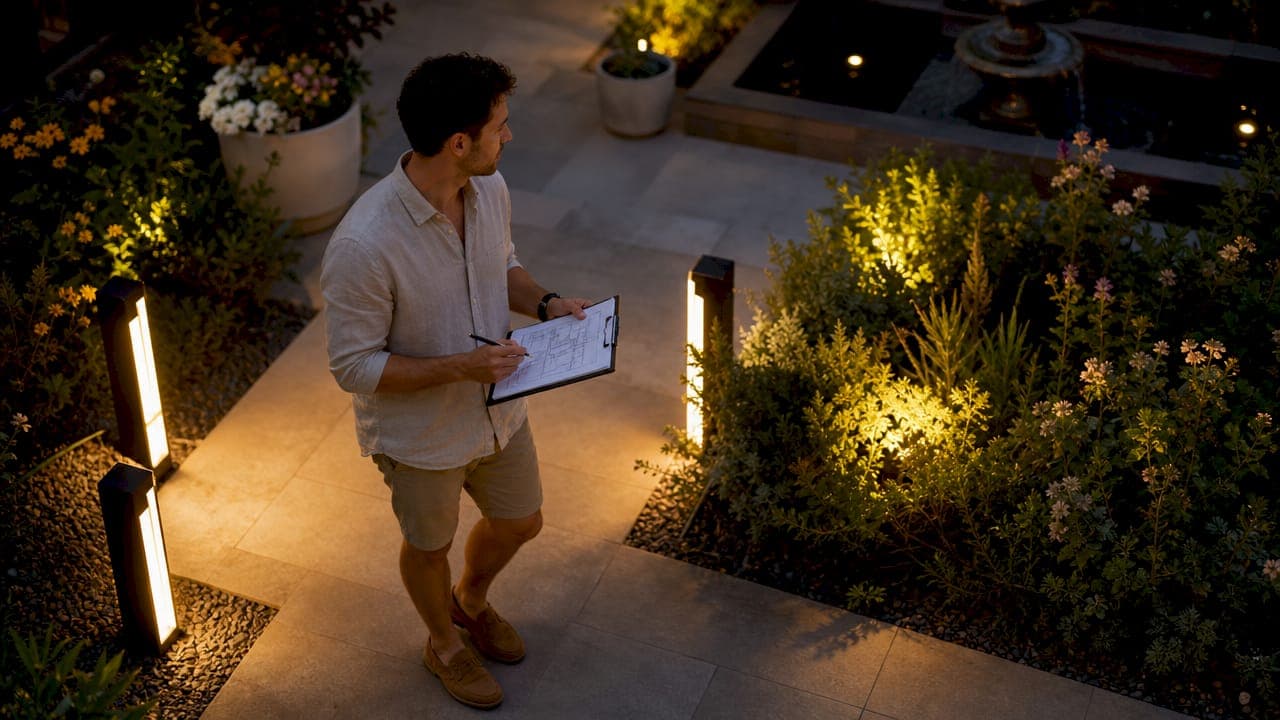
Professional design starts with a site analysis that most homeowners skip entirely. A designer reads the property's architecture, plant placement, and natural sight lines before selecting a single fixture. That analysis determines which features deserve emphasis, where shadows will fall, and how light will move across surfaces at different times of night.
Safety is the first measurable outcome. Strategic perimeter lighting eliminates hiding spots more effectively than intermittent floodlights while keeping the property feeling warm and residential. Harsh floodlights create glare that actually reduces visibility by forcing the eye to adjust between bright and dark zones. Low-level, consistent illumination along walkways and entry points solves both problems at once.
Professional design also extends evening usability by up to 50% compared to unlit outdoor spaces. That means a patio usable until 11 PM instead of 8 PM across an entire season. For homeowners who entertain or for property managers who want to maximize amenity value, that is a concrete, quantifiable return.
The benefits of professional lighting design go beyond what you see on the surface:
- Walkway and step lighting prevents trips and falls on uneven terrain after dark.
- Entry point illumination signals a secure, well-maintained property to visitors and deters opportunistic crime.
- Zoned control systems let you adjust brightness by area, reducing unnecessary energy use overnight.
- Perimeter lighting covers blind spots that floodlights leave between their bright cones.
Pro Tip: Ask your designer to walk the property with you at dusk before finalizing any plan. Shadows and sight lines change dramatically once natural light fades, and decisions made in daylight often miss the mark.
What design principles do professionals follow to enhance outdoor aesthetics?
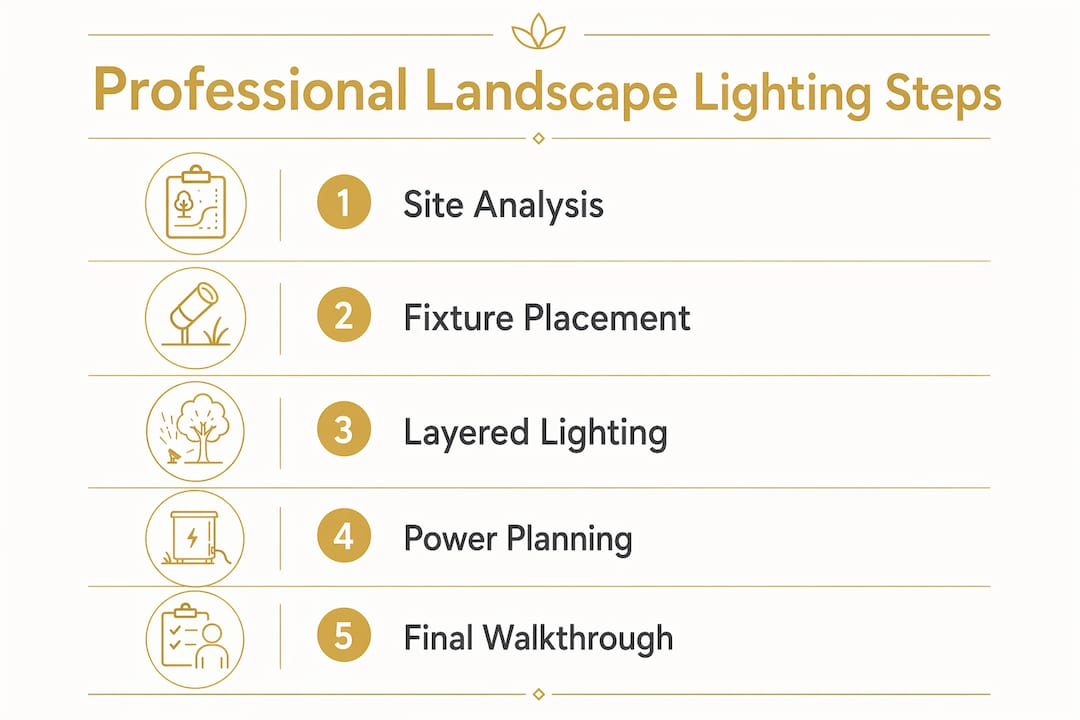
Layered lighting is the defining principle of professional landscape design. It combines uplighting, path lights, accent fixtures, and wall-wash techniques from multiple angles to create depth. A single floodlight produces a flat, institutional look. Three fixtures at different heights and angles on the same tree produce something that reads as natural and intentional.
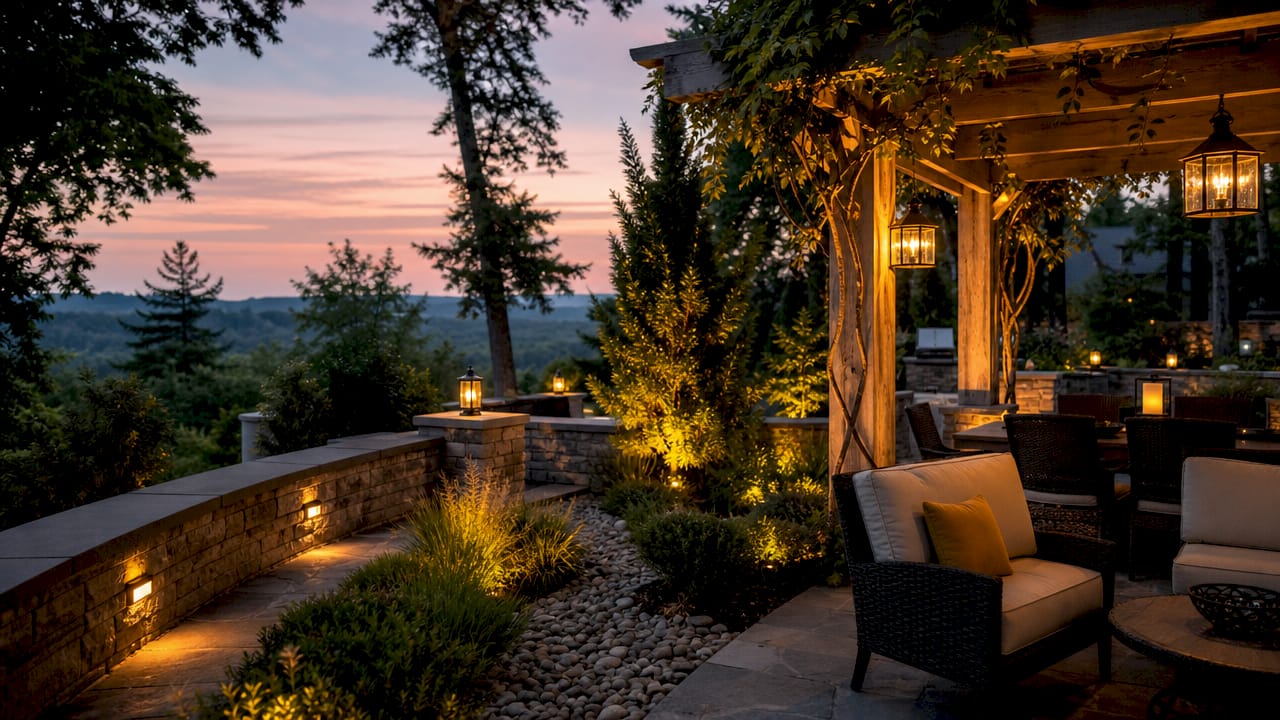
Color temperature shapes the emotional tone of a space. Professionals typically select fixtures in the 2700K to 3000K range for residential properties. That warm white range reads as inviting rather than clinical. Cooler temperatures above 4000K work for commercial security applications but feel harsh in a garden or courtyard setting.
Fixture placement and concealment are equally critical. Hiding light sources below grade or behind landscape elements eliminates glare and keeps the fixture invisible. The goal is for visitors to notice the lit architecture, not the hardware producing the light. This principle applies to uplighting on palms, grazing light across stone walls, and accent fixtures on garden sculptures.
Professionals use these core techniques to build a complete lighting picture:
- Uplighting places fixtures at ground level aimed upward to dramatize trees, columns, and facades.
- Grazing positions a fixture close to a textured surface so light rakes across it, revealing depth and detail.
- Moonlighting mounts fixtures high in trees to cast soft, dappled light downward, mimicking natural moonlight.
- Path lighting uses low fixtures to define walkways without spilling light onto surrounding areas.
- Accent lighting draws attention to specific features like sculptures, water elements, or specimen plants.
Pro Tip: For trees and large shrubs, use at least two fixtures angled from different sides. A single uplight creates a flat silhouette. Two fixtures at opposing angles produce natural depth and eliminate harsh shadows.
Great outdoor lighting functions as an art form. It layers multiple sources to support a property's emotional character rather than simply illuminating space. That distinction is what separates a professionally designed system from a collection of fixtures.
Why energy efficiency and quality materials matter in professional landscape lighting design
LED technology has changed the economics of outdoor lighting permanently. LED landscape systems use approximately 75% less energy than halogen alternatives. That savings compounds over years of nightly operation, making the upfront investment in professional design pay for itself through reduced utility costs.
Transformer sizing is the technical detail most homeowners never consider and the one that causes the most problems. Incorrect transformer sizing leads to flickering lights, power overloads, or wasted capacity across the entire system. A professional calculates the total wattage load of every fixture, adds a safety margin, and selects a transformer rated for that specific system. For a deeper look at how this calculation works, the power load planning guide from Elegant Outdoor Lights covers the process in detail.
| Component | DIY approach | Professional approach |
|---|---|---|
| Fixtures | Consumer-grade, limited weather rating | Contractor-grade, rated for soil and moisture exposure |
| Transformer | Generic sizing by fixture count | Calculated by total wattage with safety margin |
| Wiring | Surface-run or shallow burial | Conduit-protected, code-compliant depth |
| Bulbs | Mixed types, inconsistent color temperature | Matched LED, consistent Kelvin rating throughout |
| Maintenance | Reactive, fixture by fixture | Scheduled, system-wide inspection |
Contractor-grade fixtures use brass, copper, or marine-grade aluminum that resists corrosion from soil contact, irrigation spray, and coastal air. Consumer fixtures use plastic housings that degrade within two to three seasons. The material difference is invisible at installation and obvious within a year.
Pro Tip: When reviewing a proposal, ask specifically what IP rating the fixtures carry. IP65 is the minimum for in-ground or low-profile fixtures exposed to irrigation. Anything lower will fail prematurely in a well-maintained garden.
Common pitfalls of DIY landscape lighting and how professionals avoid them
DIY installations fail in predictable ways. Recognizing those patterns explains exactly why professional design produces better outcomes.
-
Poor beam spread selection. DIY installations frequently produce hot-spotting, where a narrow beam creates a harsh bright circle on a tree trunk with darkness around it. Professionals select beam angles matched to the size and shape of each feature, then use multiple fixtures to fill the field naturally.
-
Over-lighting. More fixtures do not mean better results. Flooding a yard with light destroys the contrast that makes a professionally lit property look dramatic. Professionals use restraint, lighting specific features and leaving intentional shadow between them.
-
Ignoring irrigation conflicts. Sprinkler heads, drip lines, and valve boxes occupy the same zones where lighting fixtures need to go. Amateur installations frequently damage irrigation components during digging or place fixtures where spray will hit them directly. A professional site assessment maps both systems before any fixture is placed.
-
Skipping conduit. Burying wire without conduit makes future repairs and upgrades expensive. Pulling new wire through conduit takes minutes. Digging up a yard to replace direct-buried wire takes days and damages plantings.
-
No plan for growth. Trees and shrubs grow. A fixture that perfectly uplights a young olive tree will be buried in foliage within three years if placement does not account for the plant's mature size. Professionals design for the landscape as it will look, not just as it looks today.
Early integration of conduit, transformer, and wiring placements during landscaping projects keeps installation clean, wiring concealed, and maintenance access clear for the life of the system.
How to collaborate effectively with a professional lighting designer
The most productive client relationships start before any fixture is selected. A professional designer needs to understand your priorities before proposing a system. Come to the first conversation with clear answers to these questions:
- What is the primary goal? Safety and security, aesthetic enhancement, entertainment space, or all three?
- Which features matter most to you? Specific trees, the facade, the pool, the entry gate?
- What is your maintenance preference? Some homeowners want a set-and-forget system. Others want seasonal adjustments.
- What is your realistic budget? A good designer will tell you honestly what that budget achieves and where trade-offs exist.
The initial property walkthrough is where the real design work begins. Walk it at dusk with your designer, not in the afternoon. Bring up concerns about neighbors' sight lines, light trespass onto adjacent properties, and any areas where you feel unsafe after dark. These details shape fixture selection and aiming before a single hole is dug.
Understanding how to evaluate lighting proposals protects you from vague scopes and underspecified materials. A strong proposal names fixture models, wattages, transformer capacity, wire gauge, and burial depth. Anything less leaves room for substitution after you have signed.
Pro Tip: Request a nighttime demonstration of the proposed design before full installation. Many professional designers will stage key fixtures on a test run so you can approve the look before committing to the complete system.
Key takeaways
Professional landscape lighting design protects your investment by combining expert fixture placement, correct power planning, and layered techniques that DIY installations consistently miss.
| Point | Details |
|---|---|
| Layered lighting creates depth | Combining uplighting, path lights, and accent fixtures produces natural-looking results that single fixtures cannot. |
| LED systems cut energy costs | Professional LED systems use approximately 75% less energy than halogen, reducing long-term operating costs significantly. |
| Transformer sizing prevents failures | Correct load calculation stops flickering, overloads, and wasted capacity before they become expensive problems. |
| Concealed fixtures eliminate glare | Hiding light sources below grade or behind plants keeps architecture visible and hardware invisible. |
| Early planning protects the landscape | Integrating conduit and wiring routes during landscaping prevents costly rework and plant damage later. |
What I've learned from watching properties transform after dark
I have seen the same pattern repeat on properties across Los Angeles. A homeowner installs a dozen solar path lights from a home improvement store, feels satisfied for about two weeks, and then stops noticing the yard entirely. The lighting becomes invisible because it does not do anything interesting. It just exists.
The properties that genuinely change after dark are the ones where someone made deliberate decisions about contrast, color temperature, and what deserves attention. A single well-aimed uplight on a mature oak does more for a property's nighttime character than twenty path lights ever will. That is not an opinion. It is something you can see the moment you stand in front of both.
The upfront cost of professional design is real. I will not pretend otherwise. But the cost of redoing a DIY system after two seasons of flickering lights, corroded fixtures, and irrigation damage is almost always higher than the original professional quote would have been. The math favors getting it right the first time. And beyond the math, there is the experience of actually enjoying your property after dark, which is the whole point.
— Chris
Elegant Outdoor Lights: professional landscape lighting for distinguished properties
Elegant Outdoor Lights designs and installs custom landscape lighting for estates across Los Angeles, including Bel Air, Beverly Hills, Pacific Palisades, and Malibu. Every project is designed at dusk, on site, with contractor-grade fixtures selected for your property's specific architecture and plantings.

Whether you are a homeowner looking to enhance your estate's nighttime presence or a property manager seeking a commercial-grade lighting solution for a distinguished property, Elegant Outdoor Lights delivers a white-glove experience from the first walkthrough through installation and ongoing maintenance. Contact the team to schedule your custom design consultation and see what your property looks like when it is lit the way it deserves to be.
FAQ
Why does landscape lighting need a professional designer?
Professional designers apply layered lighting techniques, correct transformer sizing, and site-specific fixture placement that produce safe, beautiful, and durable results. DIY installations consistently miss these technical details, leading to poor aesthetics, system failures, and costly rework.
What is the most common DIY landscape lighting mistake?
Hot-spotting from incorrect beam spread selection is the most common error. A single narrow-beam fixture creates a harsh bright circle with unnatural darkness around it. Professionals use multiple fixtures with matched beam angles to produce natural depth.
How much more energy-efficient are LED landscape lights?
LED landscape lighting systems use approximately 75% less energy than halogen alternatives. That efficiency compounds over years of nightly operation, making professional LED systems significantly less expensive to run long term.
What should I look for in a professional lighting proposal?
A strong proposal specifies fixture models, wattages, transformer capacity, wire gauge, and burial depth. Vague proposals that list only fixture counts and a total price leave room for material substitutions after you have signed.
How does professional lighting protect my landscape investment?
Professional design integrates conduit, wiring, and transformer placement early in the project, which keeps installation clean and makes future upgrades simple. It also accounts for plant growth, irrigation systems, and drainage, preventing the damage and rework that amateur installations typically cause within a few seasons.