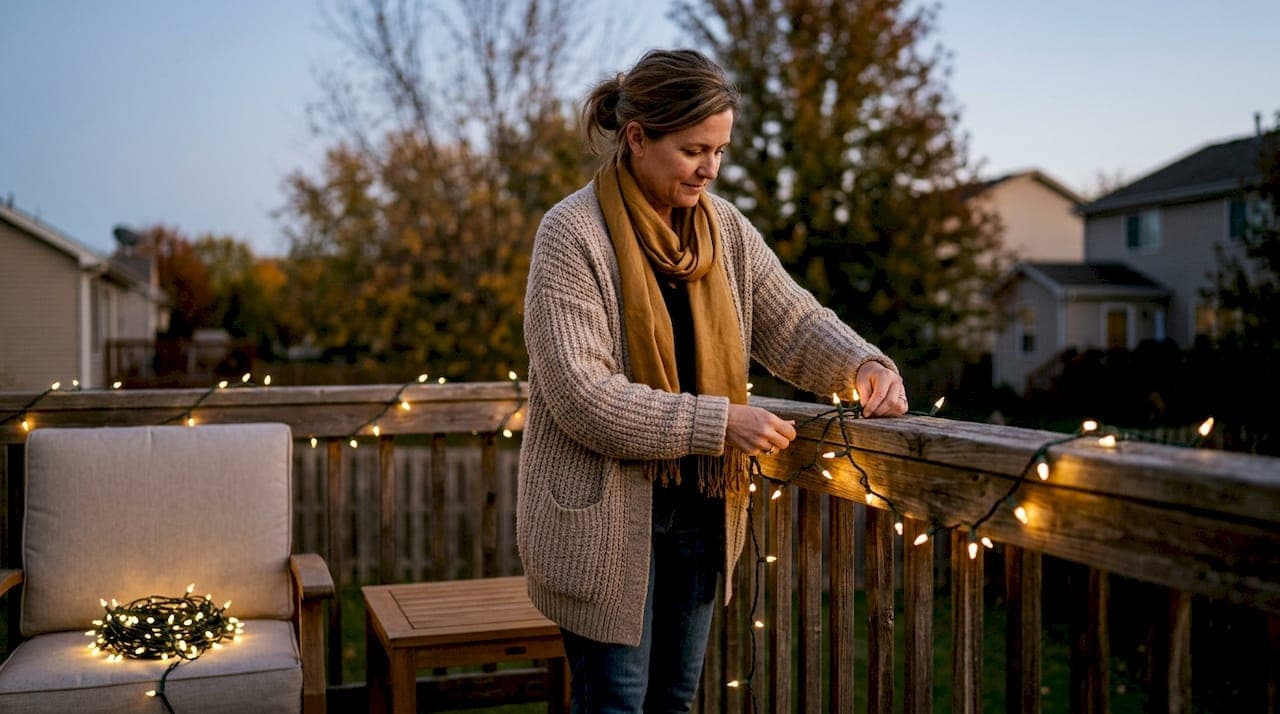
TL;DR:
- Choosing warm white LED strands at 3000K creates elegant holiday displays. Planning at dusk with consistent spacing and contrast enhances your home's architectural features. Using the right bulb sizes and limiting color choices results in a polished and cohesive look.
Avoiding tacky Christmas lights at home starts with one decision: choosing warm white LED strands at 3000K color temperature, then building every other choice around that anchor. The industry term for this approach is "architectural holiday lighting," and it treats your home's facade as a canvas rather than a billboard. Over 70% of high-end residential outdoor installations use warm white bulbs for exactly this reason. The difference between a display that earns compliments and one that earns eye rolls comes down to color consistency, deliberate spacing, and knowing which features of your home deserve light and which ones do not.
How to avoid tacky Christmas lights: start with color
Color is the single fastest way to either elevate or ruin a holiday display. Warm white at 3000K reads as golden and inviting, which is why it works so well on traditional brick, stone, and stucco exteriors. Cool white at 5000K reads as blue and clinical. Mixing warm white with cool white on the same roofline creates visual disorganization that no amount of careful spacing can fix.
Accent colors can work beautifully when used with restraint. Red works well framing a front door or wrapping a single focal tree. The rule professionals follow is a maximum of two to three colors per display. Experts recommend two to three colors maximum and strategic placement to avoid an over-the-top look. That limit forces you to make intentional choices rather than grabbing every color in the store.
One mistake homeowners make repeatedly is choosing colors that match their home's exterior. Green lights on a green house disappear entirely. Choosing colors that contrast with your home's exterior boosts visual impact and prevents the display from blending in. Warm white on a dark gray facade, or red accents on a white colonial, both create the contrast that makes a display feel intentional.
- Warm white (3000K): Best for traditional, stone, brick, and stucco homes
- Cool white (5000K): Reserve for modern architecture with clean lines only
- Red accents: Use at one focal point, such as a doorway or a single tree
- Multicolor strands: Work well on a children's playhouse or a back patio, not on the main facade
- Green on green or white on white: Avoid always. No contrast means no impact.
Pro Tip: Pick your dominant color first, then choose one accent color that appears in your home's trim, shutters, or front door. This ties the display to the architecture rather than competing with it.
What light types and bulb sizes create an elegant display?
Bulb size and type determine the overall scale and mood of your display. The wrong bulb on the wrong surface makes even a well-planned color scheme look off.
- C9 bulbs for rooflines and gutters. C9 bulbs are large, bold, and spaced 12 inches apart on commercial-grade strings. They read clearly from the street and create a strong, clean outline along rooflines and gutters.
- Mini LEDs for trees and shrubs. Mini LED strands wrap naturally around branches and provide even, soft coverage without overpowering smaller plants.
- Net lights for ground-level bushes. Net lights drop over a shrub in seconds and create a uniform grid of light that looks far cleaner than hand-wrapped strands.
- Icicle lights for eaves. Use icicle lights only along horizontal eaves, never on vertical surfaces, where they look tangled rather than intentional.
Buying in bulk protects color consistency across your entire display. Buying C9 bulbs in 500-bulb cases reduces per-bulb cost by 23–24% compared to 25-count packs, and every bulb comes from the same production batch. That batch consistency means no subtle color shifts between strings, which is one of the most common causes of a display that looks slightly off even when the colors are technically correct.
Wire color matters more than most homeowners realize. Brown-wire strands for foliage and green-wire strands for evergreens make cords nearly invisible during the day. Black wire on a dark roof achieves the same effect. The goal is for the lights to disappear in daylight and reappear at night.
- Never mix bulb styles on the same run. C9s and mini LEDs on the same string look unplanned.
- Never mix color temperatures on the same zone. A 2700K string next to a 3000K string will show a visible color shift.
- Match wire color to the surface behind it whenever possible.
Pro Tip: Buy all your lights for a single zone from the same manufacturer and the same product line. Even two brands both labeled "warm white 3000K" can read differently side by side.
How do you plan and install Christmas lights without clutter?
The key difference between elegant and tacky displays is the planning behind the lights, not the lights themselves. Planning at dusk is the single most useful habit a homeowner can adopt. Planning light placement at dusk allows you to see exactly where shadows fall, which architectural features catch light naturally, and where gaps in coverage will appear after dark.
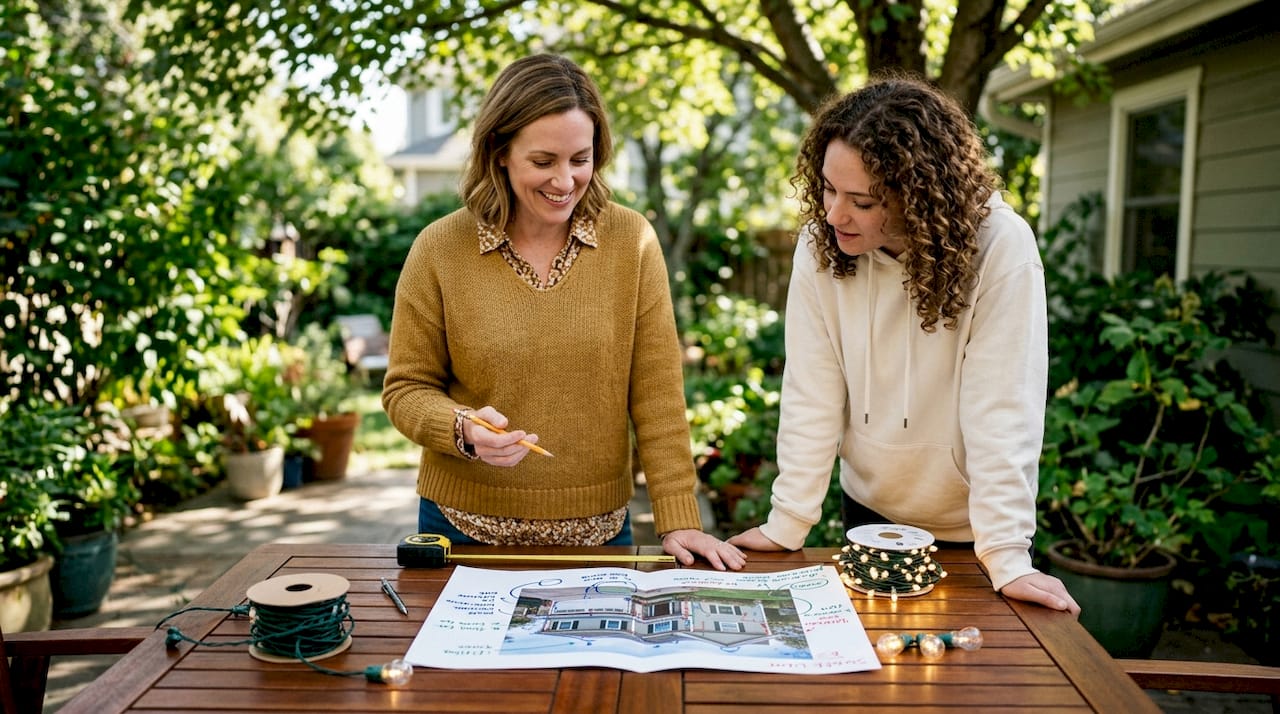
Lighting design experts stress that elegant displays rely on consistent bulb spacing and avoiding mixed color temperatures to create rhythm and calm. Rhythm in a display means the eye moves smoothly across the facade without stopping on a cluster or a gap. Consistent 12-inch spacing on C9 roofline strings and consistent 6-inch spacing on mini LED tree wraps both create that rhythm automatically.
Professional installers use anchor points to organize a display. Roof ridgelines and porch columns serve as the structural anchors from which every other element radiates. Start by outlining these anchors first, then fill in secondary elements like trees and shrubs. This approach prevents the common mistake of adding lights randomly until the display feels "full."
| Tool or material | Purpose | Common mistake to avoid |
|---|---|---|
| All-in-one clips | Secure strands to gutters and shingles cleanly | Using tape or staples that damage surfaces |
| Heavy-duty extension cords | Carry power to distant zones safely | Daisy-chaining lightweight cords |
| Outdoor timer | Automate on/off cycles for consistency | Leaving lights on all night, which fades LEDs faster |
| Wire staple gun | Attach strands along fascia boards | Stapling through the wire insulation |
| Zip ties | Bundle excess cord neatly | Leaving loose cord loops visible from the street |
- Outline rooflines and gutters first, then work downward.
- Keep all extension cords tucked behind gutters or along fence lines.
- Use a timer set to turn lights on at dusk and off by midnight.
- Step back to the street after each zone to check spacing before moving on.
Pro Tip: Take a photo of your home from the street before you start. Mark the architectural features you want to highlight. This simple step prevents you from lighting areas that add nothing to the display.
Strategic placement tips that elevate your holiday decor
Selective placement is what separates a sophisticated display from a gaudy one. The goal is to highlight your home's best features, not to cover every surface with light. A holiday lighting walkthrough before installation helps identify which elements deserve emphasis and which should stay dark.
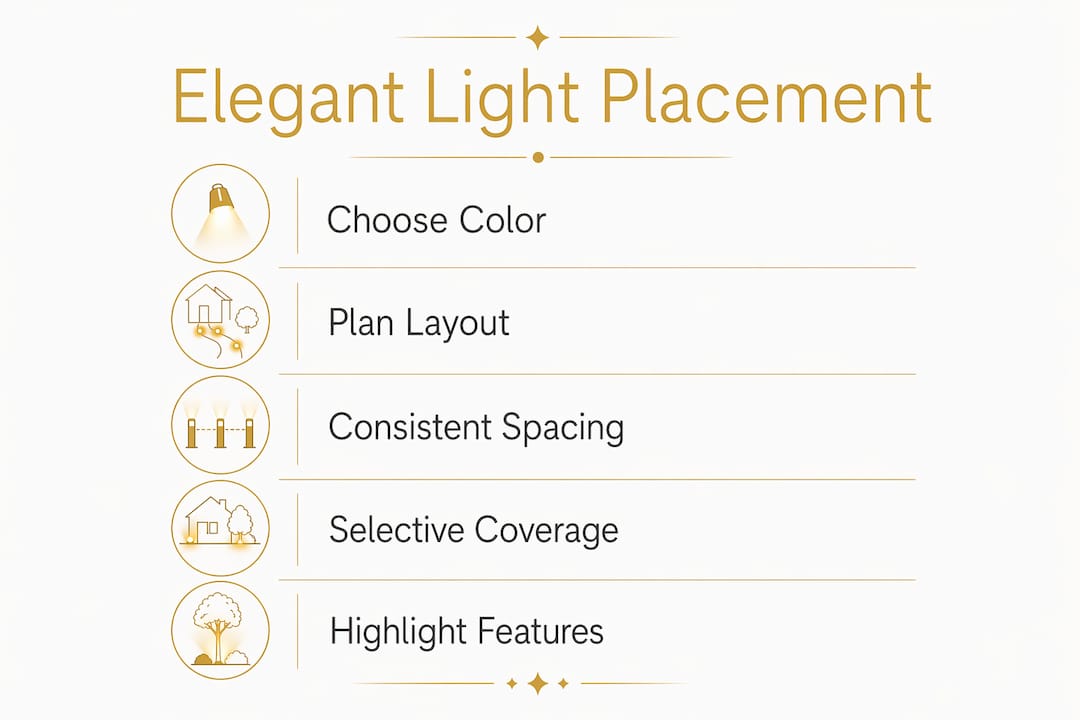
Windows, doorways, and walkways are the three areas that reward accent lighting most reliably. Framing a front door with warm white C9 bulbs draws the eye to the home's natural focal point. Lining a walkway with low-profile stake lights guides guests from the street to the entrance without competing with the main display. Uplighting a single specimen tree with a soft warm white flood creates depth and warmth that flat facade lighting cannot achieve.
Flashing or color-changing lights belong in one place at most, and that place should not be the roofline. If you want a dynamic element, limit it to a single accent tree in the yard. The rest of the display stays static. Static light reads as intentional. Flashing light reads as festive at best and chaotic at worst.
- Windows: Frame with a single strand of warm white mini LEDs along the outer edge only.
- Doorway: Use C9 bulbs or rope light to outline the frame cleanly.
- Walkway: Stake lights every 4–6 feet on alternating sides for a balanced path.
- Specimen trees: Wrap trunks first, then major branches outward. For palm tree lighting, wrap the trunk in a tight spiral and leave the fronds unlit.
- Pergolas and arbors: Drape string lights in parallel runs at equal intervals for a clean canopy effect.
Pro Tip: Less coverage with higher quality lights always outperforms full coverage with budget strands. Two perfectly wrapped trees look better than six trees wrapped carelessly.
Key Takeaways
Elegant holiday lighting is the product of deliberate color choices, consistent spacing, and selective placement that respects your home's architecture rather than competing with it.
| Point | Details |
|---|---|
| Warm white is the standard | Over 70% of high-end residential displays use 3000K warm white bulbs for a timeless look. |
| Limit your color palette | Use two to three colors maximum and choose accent colors that contrast with your home's exterior. |
| Match bulb size to surface | Use C9s on rooflines, mini LEDs on trees, and net lights on shrubs for clean, proportional coverage. |
| Plan at dusk | Walking your property at dusk reveals shadows and architectural features that daylight hides. |
| Anchor points first | Outline roof ridgelines and porch columns before adding any secondary lighting elements. |
What I've learned from watching homeowners get this wrong
The most common mistake I see is not buying too many lights. It is buying the wrong lights and then trying to make them work. A homeowner will purchase four different brands of warm white strands from four different stores, hang them all on the same roofline, and then wonder why the display looks patchy. The answer is always color temperature drift between batches. Two strings both labeled "warm white" can differ by 200K or more, and that difference is visible from the street.
The second mistake is treating the display as a project to finish rather than a design to plan. Homeowners start at one corner of the house and work their way around until they run out of lights or run out of energy. The result is a display that is dense on one side and sparse on the other. Starting with a sketch and a list of anchor points takes 20 minutes and prevents hours of rework.
My honest recommendation for first-timers is to start with the roofline only. One clean, evenly spaced run of C9 warm white bulbs along the roofline looks more polished than a chaotic mix of lights covering every surface. Master one element, then add the next season. Quality over quantity applies here more than almost anywhere else in home decor. Reviewing outdoor Christmas light styles before you shop gives you a vocabulary for what you actually want, which makes every purchase decision easier.
— Chris
Elegant Outdoor Lights: professional holiday lighting for your home
Achieving a polished holiday display takes more than good intentions. It takes commercial-grade materials, precise spacing, and a design eye trained on your home's specific architecture.
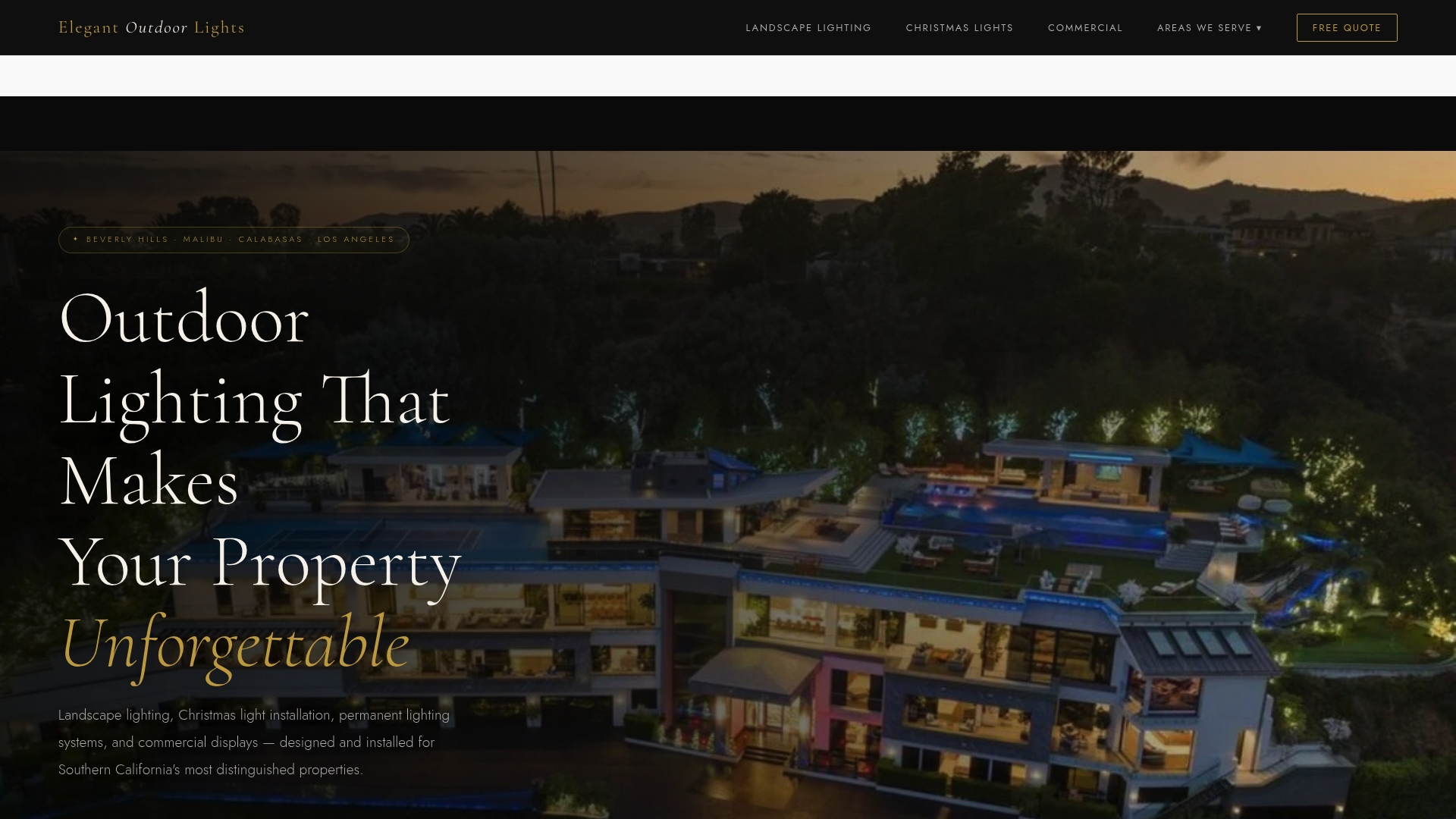
Elegant Outdoor Lights designs and installs custom holiday lighting for estates across Los Angeles, including Bel Air, Beverly Hills, Pacific Palisades, and Malibu. Every display is planned at dusk, installed with professional-grade clips and timers, and removed with care at season's end. If you want a display that looks intentional from the street and effortless from your front door, the Christmas light installation team at Elegant Outdoor Lights is ready to bring that vision to life. Contact us for a custom design consultation.
FAQ
What makes Christmas lights look tacky?
Tacky holiday lighting typically results from mixed color temperatures, inconsistent bulb spacing, and too many competing colors on the same facade. Limiting your display to two to three colors and one color temperature per zone eliminates most of the visual chaos.
What color temperature is best for elegant Christmas lights?
Warm white at 3000K is the standard for sophisticated residential displays. Over 70% of high-end installations use this color temperature because it reads as golden and inviting rather than cold or clinical.
How many Christmas lights do I need for a tree?
Plan for 100 lights per vertical foot of tree height, and buy at least 10% extra for even coverage. Running short mid-installation forces you to mix batches, which creates the color inconsistency that makes displays look unplanned.
Should I mix different types of Christmas light bulbs?
No. Mixing bulb styles or color temperatures on the same run creates a chaotic, unprofessional appearance. Use one bulb type and one color temperature per zone, and buy all strands for that zone from the same product line.
When is the best time to plan Christmas light placement?
Plan your layout at dusk, when you can see exactly how light falls on your home's surfaces. Dusk planning reveals shadows and architectural features that are invisible in daylight, allowing you to place lights where they will have the most impact.