TL;DR:
- The outdoor lighting commissioning process verifies system performance, safety, and compliance through detailed testing and documentation. It involves electrical checks, control programming, night-time light measurements, and proper handover documentation. Proper commissioning ensures optimal lighting quality, long-term reliability, and adherence to energy standards.
The outdoor lighting commissioning process is a formal quality assurance phase that takes place after installation and before project handover. It covers electrical verification, control system programming, photometric testing, and documentation to confirm that every fixture performs exactly as designed. This phase is distinct from simply powering up a system. Commissioning outdoor lighting is the step that separates a professionally delivered project from one that merely looks finished. Whether you are managing a home renovation or overseeing a full estate build, understanding this process protects your investment and guarantees long-term performance.
What is the outdoor lighting commissioning process?
The outdoor lighting commissioning process is a structured sequence of tests and adjustments that verify a lighting system meets its original design specifications. Industry professionals distinguish it sharply from "startup," which refers only to the technical act of installing and powering devices. Commissioning is broader: it is a third-party quality assurance stage that confirms full compliance with design intent. Think of startup as turning the key and commissioning as the full inspection before you drive off the lot.
The process applies to all outdoor lighting installations, from a simple garden path system to a fully programmed architectural estate display. Relevant standards such as CIE 140 and local electrical codes define the minimum performance thresholds that commissioning must verify. Elegant Outdoor Lights applies this same disciplined approach to every project it delivers across Bel Air, Beverly Hills, Pacific Palisades, and Malibu. Skipping or rushing this phase is the single most common reason a beautifully designed system underperforms in real-world conditions.
What are the main steps in the commissioning process?
Lighting systems commissioning follows a clear sequence. Each step builds on the last, and skipping any one of them creates gaps that show up later as performance problems or compliance failures.
-
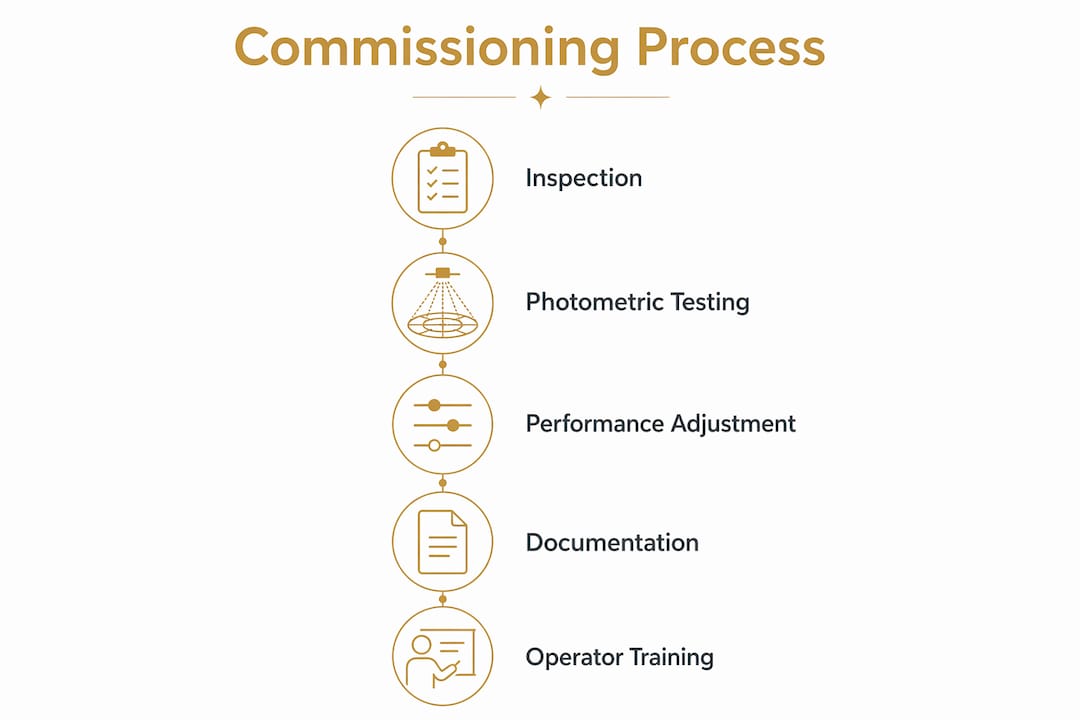
Electrical readiness verification. Before any fixture is energized, technicians run a battery of electrical tests per BS 7671 standards. These include insulation resistance tests, earth fault loop impedance checks, and RCD operation tests. Every result is recorded on a formal test certificate. This step confirms the wiring is safe and the system will not fail under load.
-
Control system programming. Once electrical safety is confirmed, the control system is configured. This means fixture addressing, zone grouping, scene programming, and schedule setup. A well-programmed system typically includes multiple scenes: full output for events, an evening dim setting, a late-night low setting, and an emergency mode. Each scene is tested individually before the full system is run together.
-
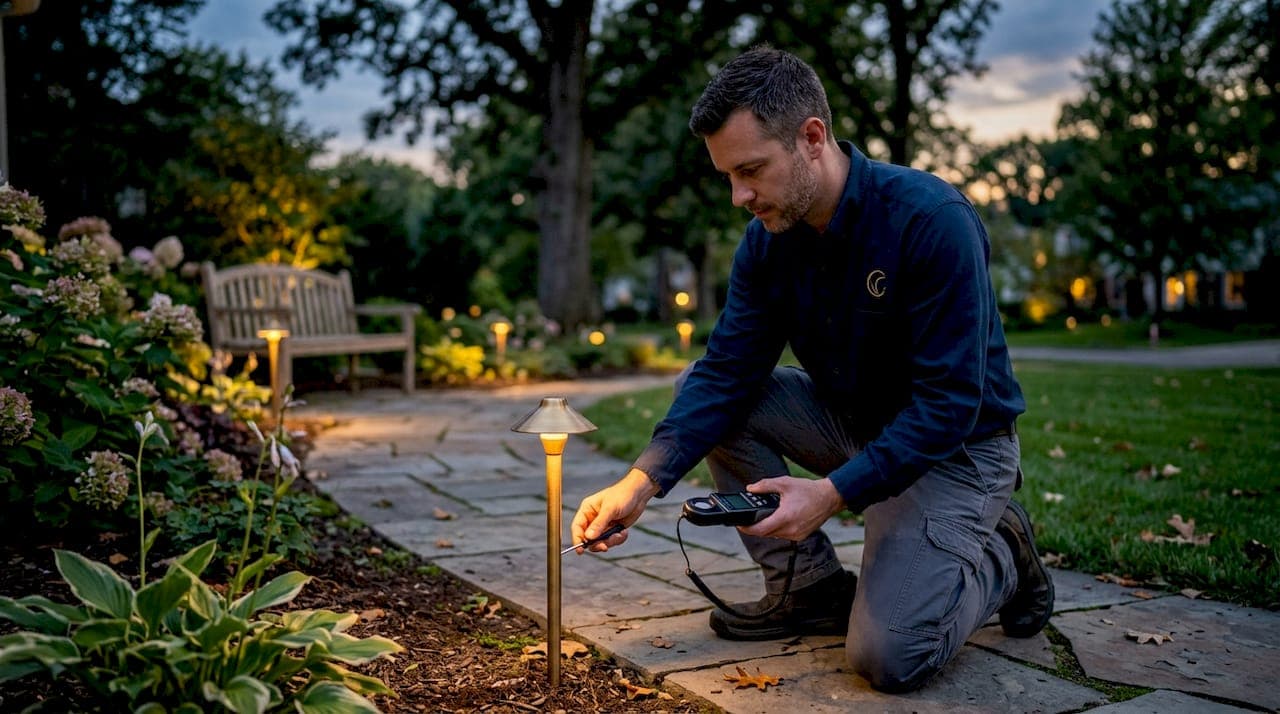
Photometric performance testing. Technicians take on-site illuminance measurements to verify that light levels match the design drawings. They check for unwanted light spill onto neighboring properties and confirm that energy density stays within code limits. This step requires darkness, which is why night-time sessions are non-negotiable.
-
Documentation and handover package assembly. Every test result, programmed setting, and as-built drawing gets compiled into a formal handover package. This package is the legal and operational record of the system as delivered.
Pro Tip: Schedule your photometric testing session at least 30 minutes after full dark. Twilight readings skew illuminance measurements and can cause you to miss light spill issues that only appear under true night conditions.
For a simple residential landscape lighting setup, the full commissioning process often wraps up in a single day. Complex systems with motion sensors, wireless connectivity, and multiple control zones can require several days of programming and testing. Knowing this upfront helps you build a realistic project schedule when evaluating outdoor lighting proposals.
Why is commissioning critical for performance and compliance?
Most homeowners treat commissioning as a final checkbox. It is not. Commissioning is the performance optimization phase that determines whether a system is genuinely usable and energy efficient, or just technically operational. The difference shows up immediately in how the property looks and feels after dark.

Real-world conditions introduce variables that no design drawing can fully predict. Surface reflectance, foliage density, and ambient light pollution from neighboring streets all affect how light behaves on your property. Environmental factors require on-site adjustments during commissioning to produce lighting that is both beautiful and compliant. A fixture aimed perfectly on paper may create glare or dead spots once installed among mature trees.
The benefits of thorough commissioning include:
- Energy code compliance. Verified illuminance levels and energy density readings confirm the system meets local codes, protecting you from fines or required retrofits.
- Glare and spill control. On-site adjustments eliminate light trespass onto neighboring properties before handover, not after a complaint.
- Reliable control behavior. Programmed scenes and schedules are tested under real conditions, so timers and sensors respond correctly from day one.
- Documented baseline. A formal commissioning record gives your maintenance team a reference point for every future service call.
"Commissioning is where the system's final behavior is truly designed. Real-world programming of schedules, dimming, and sensor interplay based on night testing is what separates a great installation from a good one."
Skipping this phase does not save time. It transfers the cost of corrections from the contractor to the owner, usually at a much higher price.
What documentation should you receive at handover?
A complete commissioning handover is not a single report. It is a package of six critical deliverables that give you full operational control over your system from day one.
| Deliverable | What it contains |
|---|---|
| Electrical test certificates | Insulation, earth loop, and RCD test results per BS 7671 |
| Photometric compliance report | On-site illuminance measurements vs. design targets |
| Control system as-programmed records | Scene settings, zone maps, schedules, and sensor configurations |
| Regulatory compliance documentation | Evidence of code adherence for energy and light trespass limits |
| As-built drawings | Updated fixture layout reflecting any field changes |
| O&M manual | Operating instructions, spare parts list, and maintenance schedule |
Proper commissioning documentation reduces future service costs by giving technicians an accurate picture of the system without guesswork. An O&M manual with a spare parts list means your estate manager can order the correct replacement lamp or driver without waiting for a site visit.
Pro Tip: Ask your contractor to include a one-page quick-reference card with the O&M manual. It should list how to override schedules, adjust dimming levels, and reset the system after a power outage. This single page prevents the majority of unnecessary service calls.
Operator training is the final deliverable that most contractors underdeliver. A 30-minute walkthrough with your estate manager or facility team covers schedule overrides, scene adjustments, and basic fault identification. This training pays for itself the first time a simple fix is handled in-house instead of requiring a technician visit.
How does commissioning differ for residential vs. complex projects?
The core steps of commissioning outdoor lighting are the same across project types. The time, complexity, and resources required vary significantly based on system sophistication.
For a straightforward residential landscape lighting installation with fixed-output fixtures and a basic timer, commissioning typically covers:
- A single electrical test session confirming safe wiring
- Timer programming and a brief photometric walkthrough
- A one-page handover document with fixture locations and settings
- A short owner walkthrough, often completed in under an hour
A complex architectural or estate system tells a different story. Projects with multiple scenes, motion sensors, and wireless network connectivity require multiple commissioning sessions spread across several evenings. Each sensor zone needs individual calibration. Network-connected fixtures require addressing verification across the full system before group behavior can be tested. A single scene change can affect dozens of fixtures simultaneously, so each adjustment must be tested in sequence.
The key differences that drive complexity include:
- Number of control zones. More zones mean more programming time and more individual tests.
- Sensor integration. Motion sensors, daylight sensors, and astronomical timers each require separate calibration against real conditions.
- Network connectivity. Wireless systems need signal strength verification at every node before programming begins.
- Aesthetic precision. Architectural lighting on a distinguished estate demands tighter tolerances on beam angles and color temperatures than a standard path lighting setup.
For homeowners planning a high-end architectural lighting design, building two to three evening commissioning sessions into the project schedule is standard practice. Trying to compress this into a single daytime visit produces a system that works but never looks the way it was designed to look.
Key Takeaways
Thorough outdoor lighting commissioning is the only reliable way to confirm that a lighting system performs as designed, meets energy codes, and remains easy to maintain long after handover.
| Point | Details |
|---|---|
| Commissioning vs. startup | Commissioning is full quality assurance; startup is just powering the system on. |
| Six required deliverables | Expect electrical certificates, photometric reports, control records, compliance docs, as-built drawings, and an O&M manual. |
| Night-time calibration is mandatory | Photometric testing and scene adjustments only produce accurate results in true darkness. |
| Complexity drives timeline | Simple residential systems finish in hours; architectural estate systems need multiple evening sessions. |
| Owner training reduces costs | A 30-minute walkthrough prevents the majority of unnecessary post-handover service calls. |
Why I always insist on night-time commissioning sessions
Most contractors want to wrap commissioning during business hours. I understand the scheduling pressure. But every time a client agrees to a daytime-only sign-off, they end up calling back within a month because a scene looks wrong, a sensor triggers too early, or a fixture is washing a wall it was never meant to touch.
The real design work happens after dark. That is when you see how foliage absorbs or reflects light, how ambient street glow interacts with your property's perimeter, and whether the programmed scenes actually feel the way the client imagined. No rendering or photometric calculation replaces standing on the driveway at 9 p.m. and watching the system run through its full sequence.
The other mistake I see constantly is owners leaving the room during final adjustments. Your presence during that session matters. You are the only person who knows whether the entry gate looks welcoming or too bright, whether the pool terrace feels intimate or overlit. A technician can hit the design target perfectly and still miss what you actually want. Commissioning is the one moment in the project where your real-time feedback changes the outcome permanently.
Skipping thorough documentation is the third pitfall. I have seen estate managers inherit systems with no records and spend thousands on diagnostic visits that a proper O&M manual would have made unnecessary. The paperwork feels like overhead. It is actually the most durable part of the project.
— Chris
Elegant Outdoor Lights and your commissioning project
Elegant Outdoor Lights handles every phase of a lighting project from custom design through formal commissioning and ongoing maintenance. Every installation includes a structured commissioning process: electrical verification, control programming, night-time photometric testing, and a complete handover package with operator training.
For homeowners and estate managers across Los Angeles who want a system that performs exactly as designed from the first night, Elegant Outdoor Lights delivers that standard on every project. Whether you need professional landscape lighting for a year-round estate installation or a fully commissioned seasonal holiday display, the team brings the same white-glove process to every property. Contact Elegant Outdoor Lights to schedule a custom design consultation and commissioning plan tailored to your estate.
FAQ
What is the outdoor lighting commissioning process?
The outdoor lighting commissioning process is a formal quality assurance phase after installation that includes electrical testing, control system programming, photometric measurements, and documentation to verify the system meets its design specifications before handover.
How long does outdoor lighting commissioning take?
Basic residential landscape lighting commissioning often completes in a single day, while complex systems with motion sensors and wireless connectivity can require multiple evening sessions spread over several days.
What documents should I receive after commissioning?
A complete handover package includes electrical test certificates, a photometric compliance report, control system as-programmed records, regulatory compliance documentation, as-built drawings, and a full Operation and Maintenance manual.
Why does commissioning need to happen at night?
Night-time sessions are required because photometric measurements and scene adjustments only produce accurate results in true darkness. Twilight or daytime readings miss light spill issues and produce incorrect illuminance data.
What is the difference between startup and commissioning?
Startup is the technical act of installing, addressing, and powering fixtures. Commissioning is the broader quality assurance process that verifies the full system meets design intent, energy codes, and operational requirements before the project is formally handed over.