TL;DR:
- Festoon outdoor lighting uses globe-shaped bulbs on weatherproof cables to create warm, ambient illumination. Proper IP rating, bulb size, and spacing are essential for durability and aesthetic appeal in outdoor spaces. Layering festoon lights with other fixtures enhances outdoor atmosphere and visual interest.
Festoon lighting outdoor is defined as a string of evenly spaced, globe-shaped bulbs mounted on heavy-duty, weather-resistant cable designed to cast warm, ambient light across outdoor spaces. The industry term is "festoon string lighting," and it covers everything from backyard patio setups to full event canopies. These lights are a favorite for homeowners who want to create an inviting outdoor atmosphere without a major renovation. With IP-rated cables and bulb sizes ranging from 40mm to 95mm, festoon lighting sits at the intersection of practical durability and genuine visual warmth.
What is festoon lighting outdoor and how does it work?
Festoon lighting is a string lighting system built around globe-shaped bulbs spaced at regular intervals along a single, flexible cable. Unlike fairy lights, which use tiny pin-sized bulbs, festoon lights use large, visible globes that produce a bold, warm glow. The cable itself is the backbone of the system. It carries power from a single source to every bulb along the run, and its quality determines how long the setup lasts outdoors.
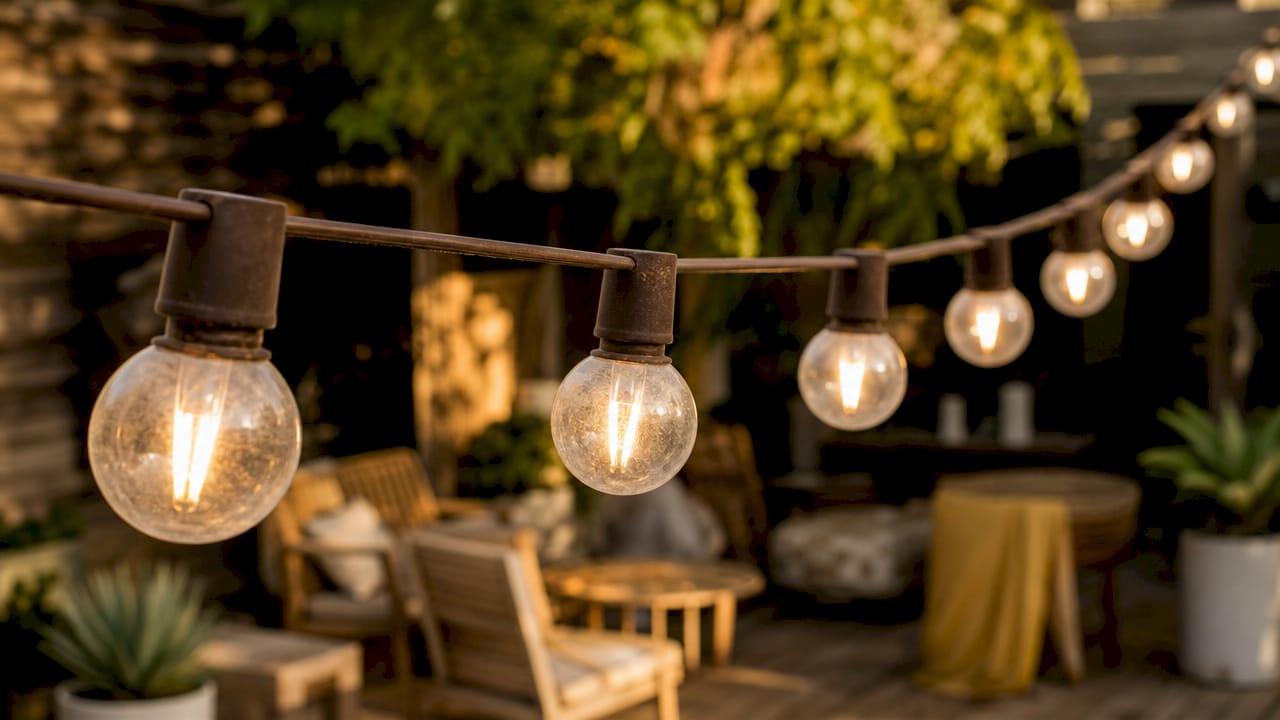
The key technical features that separate festoon lighting from standard outdoor string lights are the cable weight, the bulb size, and the IP rating. Globe bulbs typically measure 40mm to 95mm in diameter, spaced roughly every 30–60cm along runs that can stretch 20–45 meters for larger setups. That spacing matters because it controls both the light output and the visual rhythm of the installation.
Core components every homeowner should know
- Cable: Heavy-duty rubber or PVC casing protects the wiring from moisture, UV exposure, and physical wear.
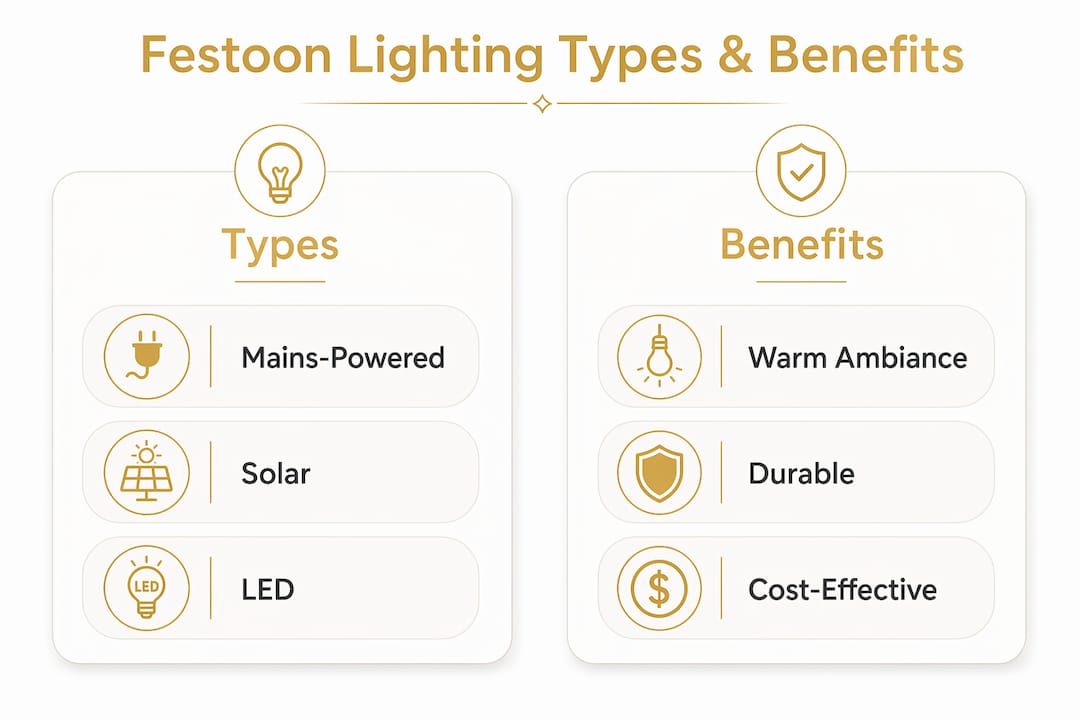
- Bulbs: Globe-shaped, available in incandescent, halogen, or LED. LED versions last significantly longer and use less energy.
- IP rating: The Ingress Protection rating tells you how well the light resists water and dust. Sheltered areas require IP44, while fully exposed locations need at least IP65.
- Power source: Mains-powered or solar-powered, each with distinct trade-offs.
- Connectors: Many systems are linkable, meaning you can chain multiple runs together for longer coverage.
Pro Tip: Always check the IP rating before buying. A set rated IP44 placed in a fully exposed garden will fail faster and may void your home insurance.
Mains-powered festoon lighting delivers consistent brightness suitable for task lighting and entertaining. Solar festoon lights work well for ambient perimeter lighting in areas without easy electrical access. The trade-off is reliability. Solar output depends on daylight hours, which makes mains power the stronger choice for year-round use.
What are the benefits of festoon lights for outdoor spaces?
The biggest benefit of festoon lighting is its ability to define space. Landscape designers note that festoon lighting creates enclosure, effectively turning an open patio or garden into a distinct "outdoor room" that feels welcoming and intimate. That effect is hard to achieve with spotlights or path lights alone.
Festoon lighting also works across a wide range of settings and styles. A modern minimalist garden looks sharp with clear globe LEDs on black cable. A traditional cottage garden feels warm and romantic with amber-tinted Edison-style bulbs on brown cable. The same product category serves both aesthetics without compromise.
"Layering festoon lighting with lanterns, spotlights, or path lights creates a multi-dimensional scheme that prevents flat effects and allows mood adjustments throughout the evening." This approach, recommended by outdoor lighting designers, is the single most effective way to make a garden feel professionally lit.
Common uses for festoon lighting include:
- Patios and decks: Overhead canopy runs create a ceiling effect that makes the space feel finished.
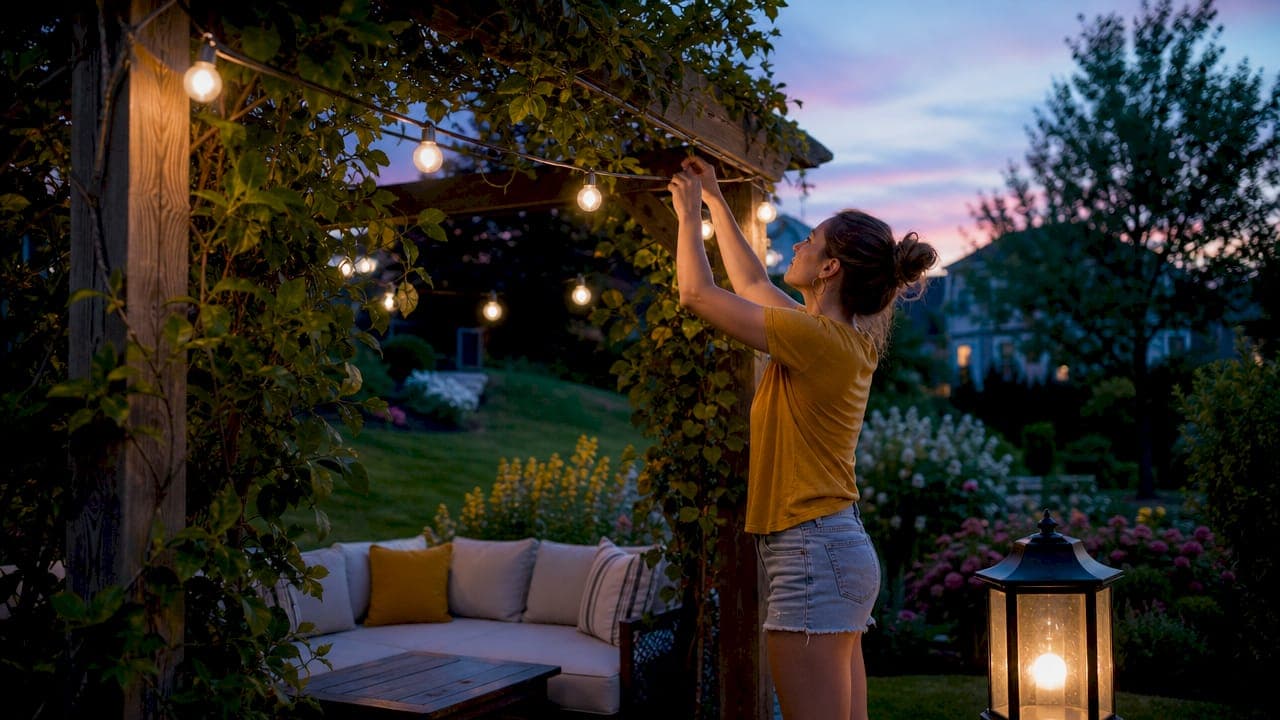
- Garden pergolas and arbors: Draping lights along beams adds warmth without permanent fixtures.
- Weddings and outdoor events: Long runs across open fields or between trees define the event space beautifully.
- Pool surrounds: IP65-rated sets add ambiance safely around water features.
- Driveways and pathways: Low-hung runs guide guests while adding visual interest.
The cost of entry is also reasonable. Quality festoon sets typically cost between £20 and £80, making them one of the most affordable outdoor lighting upgrades available. For the visual impact they deliver, few other options come close at that price point.
How to choose and install outdoor festoon lighting
Choosing the right festoon lighting starts with your location. Ask yourself whether the lights will hang under a covered porch or fully exposed to rain and wind. That single answer determines your minimum IP rating. IP65 is the industry standard for fully exposed outdoor locations. Using IP44 in those conditions is a common and costly mistake.
Follow these steps for a clean, safe installation:
- Map your anchor points. Identify where the cable will attach. Posts, fence tops, pergola beams, and wall hooks all work. Space anchors no more than 3 meters apart to prevent excessive sag.
- Measure your run. Calculate the total length you need, then add 10–15% for the natural cable drape, called a "swag." Bulb spacing of 30–60cm with a gentle swag ensures even light distribution without stressing the sockets.
- Choose your power source. Confirm whether a mains outlet is accessible. If not, solar is your fallback, though brightness will vary.
- Check for a ground wire. For mains-powered installations, always verify the cord includes a ground wire. Cheaper sets often omit this, which creates a real safety risk outdoors.
- Hang the cable with slack. Never pull the cable tight between anchor points. Tension stresses the sockets and shortens the life of the entire string.
- Test before finalizing. Plug in and check every bulb before securing the cable permanently. Replacing a bulb mid-installation is far easier than after.
Pro Tip: Choose a warm color temperature between 2700K and 3000K. That range produces the cozy, golden glow that makes outdoor spaces feel inviting rather than clinical.
Maintenance is straightforward. Wipe bulbs with a dry cloth monthly to remove dust and debris. Replace failed bulbs promptly to avoid voltage stress on neighboring sockets. Store solar units indoors during extended cold spells to protect the battery.
How does festoon lighting compare to other outdoor string lights?
Festoon lighting occupies a specific place in the outdoor string lights category. Understanding where it sits relative to other options helps you choose the right product for your space.
| Feature | Festoon lighting | Fairy lights | LED strip lights |
|---|---|---|---|
| Bulb size | 40mm–95mm globe | 2mm–5mm micro | No individual bulbs |
| Light output | Bold, warm glow | Delicate twinkle | Even, directional wash |
| Weather resistance | IP44–IP65 rated | Typically IP44 only | Varies widely |
| Best use | Patios, events, gardens | Trees, indoor decor | Architectural accents |
| Aesthetic effect | Festive, defined ambiance | Soft, romantic sparkle | Modern, architectural |
| Typical run length | 10–45 meters | 5–20 meters | Custom cut lengths |
Fairy lights create a delicate, twinkling effect that works beautifully in trees and indoor settings. They are not built for long outdoor runs or high-traffic event use. Festoon lights, by contrast, are purpose-built for outdoor exposure. Their larger bulbs produce enough light to actually illuminate a space, not just decorate it.
LED strip lights serve a completely different function. They work best for architectural accents, under-rail lighting, and step illumination. They do not replicate the festive, overhead canopy effect that festoon lighting delivers. For homeowners who want a warm, social outdoor atmosphere, festoon lighting is the most direct solution. For those interested in permanent outdoor lighting types, festoon systems can also be installed as fixed, year-round features with the right hardware.
Key Takeaways
Festoon lighting outdoor is the most versatile and cost-effective way to create a warm, defined outdoor atmosphere, provided you match the IP rating to your exposure level and use a warm color temperature between 2700K and 3000K.
| Point | Details |
|---|---|
| IP rating is non-negotiable | Use IP44 for sheltered areas and IP65 for fully exposed outdoor locations. |
| Bulb size drives the effect | Globe bulbs from 40mm to 95mm produce bold, warm light that fairy lights cannot match. |
| Spacing and swag matter | Space bulbs 30–60cm apart with a natural cable drape to protect sockets and distribute light evenly. |
| Ground wire is a safety must | Always confirm mains-powered sets include a ground wire before installation. |
| Layering multiplies impact | Combine festoon lights with path lights or spotlights for a multi-dimensional outdoor scheme. |
Why festoon lighting rewards careful planning
I have seen homeowners buy a set of festoon lights, string them up in an afternoon, and wonder why the result looks flat or feels underwhelming. The lights themselves were not the problem. The planning was.
The single most common mistake is skipping the IP rating check. A set rated IP44 hung over an exposed patio in a rainy climate will fail within one season. That is not a product defect. It is a mismatch between the product's design and the environment it was placed in. Choosing IP65 from the start costs a little more upfront and saves a lot of frustration later.
The second mistake is ignoring color temperature. Cool white LEDs look sharp in a showroom and harsh in a garden. A warm 2700K to 3000K bulb changes the entire feel of a space. It is the difference between a space that looks lit and one that feels welcoming.
What I find genuinely exciting about festoon lighting is how much it rewards layering. A single overhead run is pleasant. Add a few path lights at ground level and a lantern or two on a table, and the space suddenly has depth. That layered approach is what separates a thoughtfully designed outdoor space from one that just has lights in it. If you are planning a setup for entertaining, start with the festoon run overhead, then build the rest of the scheme around it.
— Chris
How Elegant Outdoor Lights can bring your outdoor vision to life
Festoon lighting is one of the most rewarding upgrades you can make to an outdoor space. Getting the IP rating, spacing, and color temperature right from the start means years of reliable, beautiful results.
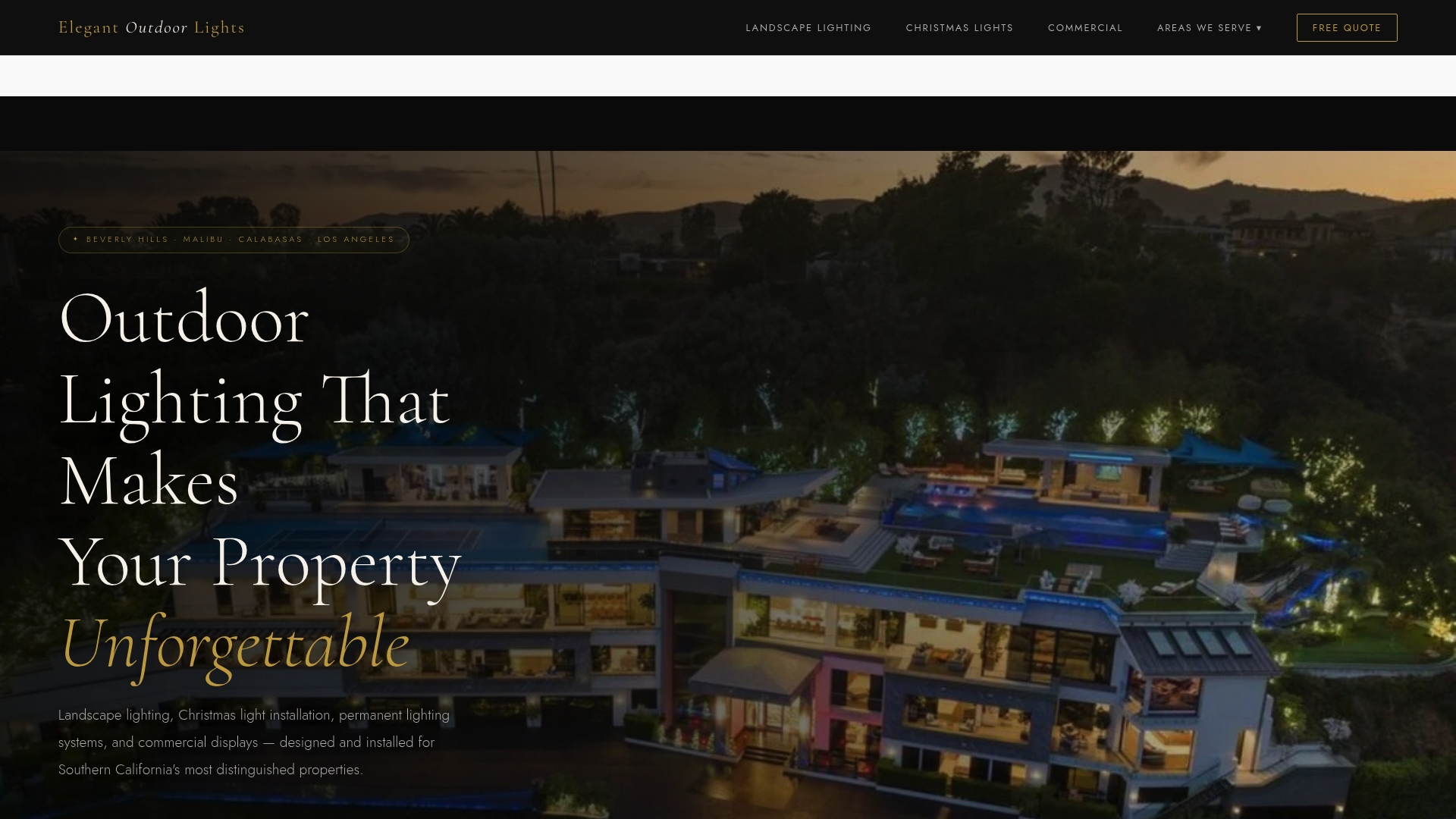
Elegant Outdoor Lights designs and installs custom landscape lighting for estates across Bel Air, Beverly Hills, Pacific Palisades, and Malibu. Every project is planned at dusk, installed by professionals, and maintained with care. Whether you want a festive seasonal display or a permanent outdoor lighting scheme, the team at Elegant Outdoor Lights delivers a white-glove experience from the first consultation to the final switch-on. Reach out to explore professional holiday lighting and year-round outdoor lighting options tailored to your property.
FAQ
What is festoon lighting outdoor?
Festoon lighting outdoor is a string of globe-shaped bulbs on heavy-duty, weather-resistant cable designed to provide warm, ambient illumination for patios, gardens, and events. Bulbs typically range from 40mm to 95mm in diameter and are spaced every 30–60cm along the run.
What IP rating do outdoor festoon lights need?
Sheltered outdoor areas require a minimum IP44 rating, while fully exposed locations need at least IP65 for reliable weather protection. Using IP44 in exposed conditions risks premature failure and may affect your home insurance.
What color temperature is best for festoon lighting?
A warm color temperature between 2700K and 3000K creates the most inviting outdoor atmosphere. Cool white LEDs above 4000K produce a harsher light that reduces the cozy ambiance festoon lighting is known for.
Can festoon lights be used for outdoor events?
Festoon lights are widely used for weddings, garden parties, and outdoor events. Runs can extend 20–45 meters, and linkable systems allow multiple strings to connect for large-scale coverage.
Are solar festoon lights as good as mains-powered ones?
Solar festoon lights work well for ambient perimeter lighting in areas without electrical access. Mains-powered sets offer more consistent brightness and are the better choice for active entertaining and year-round use.