Permanent outdoor lighting is defined as a professional-grade LED system hardwired into your home's exterior, designed for continuous year-round operation. Unlike seasonal string lights or solar path markers, these systems integrate fixed fixtures, dedicated wiring, and a control hub that lets you adjust brightness, color, and schedules from a smartphone app. The types of permanent outdoor lighting available today cover everything from low-level path lights to wide-area floodlights, each serving a distinct role in safety, aesthetics, and property value. Choosing the right combination requires understanding what each fixture type does and where it performs best.
1. What are the main types of permanent outdoor lighting?
Permanent outdoor fixtures fall into five core categories, each designed for a specific location and purpose on a residential property. Knowing these categories is the first step toward building a lighting plan that works year-round.
-
Path and bollard lights. These low-level fixtures line walkways, driveways, and garden borders. They cast light downward at ground level, guiding foot traffic safely after dark without creating glare. Bollard lights stand 18–36 inches tall and work especially well along long driveways on larger estates.
-
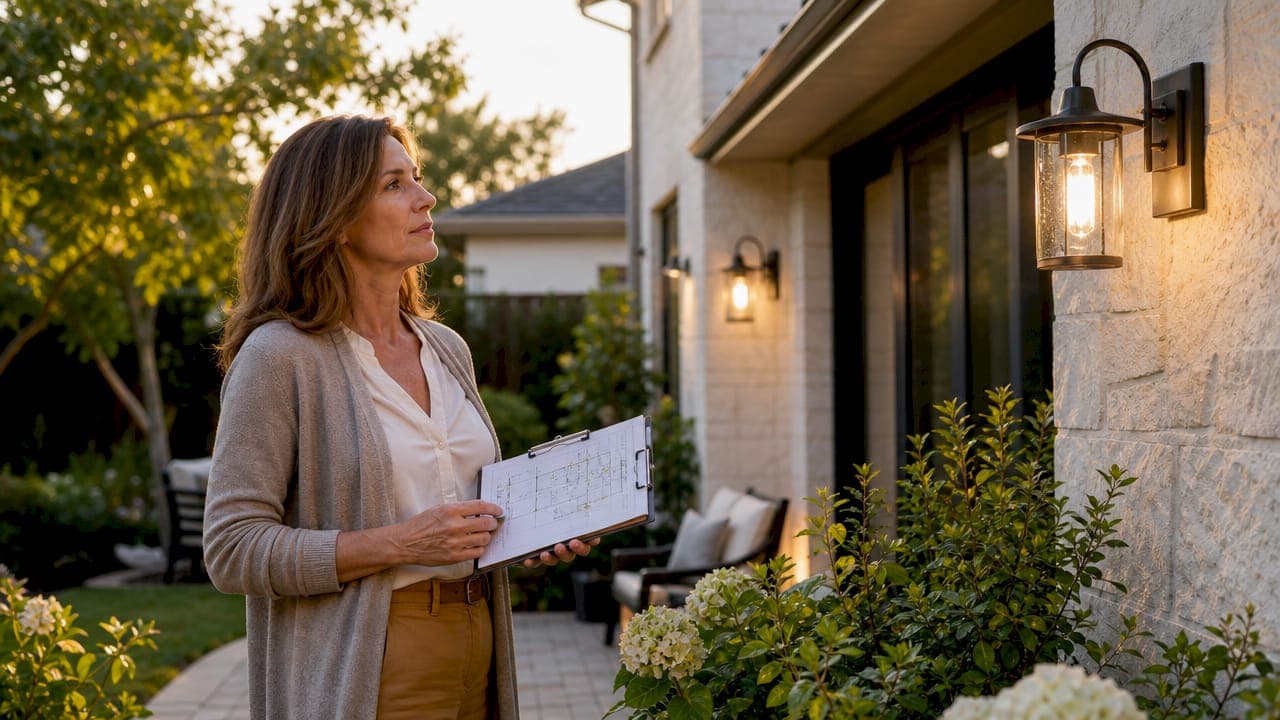
Wall-mounted lights. Mounted at entrances, garage facades, and along perimeter walls, these fixtures provide both security and curb appeal. They illuminate entry points clearly, which deters unwanted visitors and makes guests feel welcomed. For exterior wall lighting on luxury homes, lantern-style and linear sconce designs are the most popular choices.
-
Floodlights. Floodlights deliver wide-area coverage across driveways, backyards, and open facades. A single commercial-grade LED floodlight can illuminate a 180-degree arc, making it the most effective fixture type for security coverage. They are typically mounted high on walls or eaves for maximum spread.
-
Spotlights and uplights. These directional fixtures accent architectural features, trees, and landscape elements. Uplights placed at the base of a palm tree or stone column create dramatic visual depth after dark. For palm tree lighting and statement plantings, a narrow-beam spotlight with a 15-degree beam angle produces the cleanest effect.
-
Step and recessed lights. Built into stair risers, deck boards, or retaining walls, these fixtures eliminate trip hazards without cluttering the visual design. They are the most discreet option in permanent landscape lighting and work best when paired with a dimmer so brightness adjusts to the time of night.
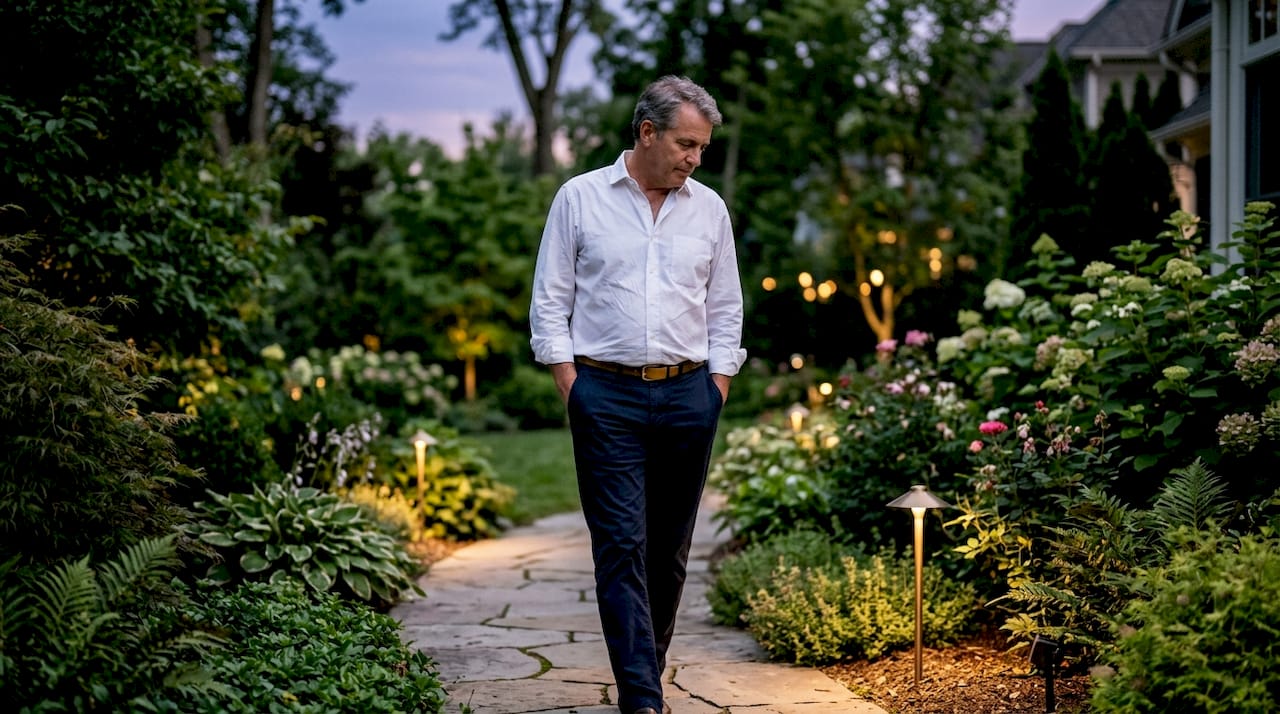
Pro Tip: Design your fixture plan by walking the property at dusk. Note where you naturally slow down or feel uncertain about footing. Those exact spots are where step lights and path lights belong.
2. How installation methods and materials affect performance
The quality of a permanent outdoor illumination system depends as much on how it is installed as on which fixtures you choose. Roofline LED systems use weatherproof aluminum channels mounted with stainless screws, and a professional crew typically completes an average home in one to two days. That speed is possible only because experienced installers dry-fit every channel section before committing to final mounting, accounting for soffits, corners, and architectural breaks that affect how invisible the system looks during daylight hours.
Here is the standard professional installation workflow:
- Property walk and layout planning. The installer maps fixture locations, wiring runs, and controller placement before any hardware touches the wall.
- Dry-fit and channel cutting. Aluminum mounting channels are cut to length and test-fitted along rooflines and fascia boards to confirm alignment and day-visibility.
- Wiring and concealment. Wiring runs through conduit or inside channels and is routed to avoid visible exposure. Concealed wiring is a defining quality marker in permanent landscape lighting.
- Controller and hub installation. The Wi-Fi controller or smart hub is mounted in a weatherproof enclosure and connected to the home's electrical system.
- Programming and testing. Each zone is programmed, scenes are created, and the full system is tested across brightness and color ranges before the crew leaves.
"Permanent systems emphasize concealed wiring and durable fixtures rated for outdoor use, significantly enhancing curb appeal and long-term reliability over temporary solutions." — Big Pig Smart Lighting
Materials matter just as much as method. IP66-rated fixtures or higher are the minimum standard for general outdoor use, with coastal properties requiring even higher ratings to resist salt air and moisture. UV-stable housing materials prevent yellowing and cracking over years of sun exposure, which is a real concern in climates like Los Angeles, Malibu, and Pacific Palisades.
3. Advanced controls and customization options
Customization is the defining characteristic of permanent lighting versus traditional systems. Premium permanent systems support RGBWW LEDs, which produce both natural white tones and dynamic color effects, all controlled remotely through a smartphone app. That flexibility means the same fixture that lights your driveway white on a Tuesday night can shift to warm amber for a dinner party or red and green for the holiday season.
The control features available in 2026 systems include:
- Scheduling. Set lights to turn on at sunset and off at midnight automatically, with no manual input required after initial setup.
- Scene creation. Save custom brightness and color combinations for specific occasions, such as a "security mode" at full white or a "party mode" in rotating colors.
- Dimming. Reduce brightness in zones where full output is unnecessary, which extends LED lifespan and reduces energy draw.
- Remote access. Adjust any zone from anywhere with a Wi-Fi connection, useful for property managers overseeing multiple homes.
- Integration. Higher-end controllers connect with smart home platforms, allowing voice commands and automation triggers based on motion sensors or time of day.
Pro Tip: Create at least three saved scenes during your initial setup: a daily security scene at full brightness, a relaxed evening scene at 40% warm white, and a holiday or event scene with color. You will use all three within the first month.
The energy efficiency of LED-based permanent systems is a practical advantage over older halogen or incandescent outdoor fixtures. LED technology draws a fraction of the wattage for equivalent light output, which adds up significantly across a large estate with dozens of fixtures running nightly.
4. Comparing permanent outdoor lighting types for residential use
Different fixture types serve different needs, and the best permanent landscape lighting systems combine several types rather than relying on one. The table below compares the five core fixture categories across the criteria that matter most to homeowners and property managers.
| Fixture type | Best location | Primary benefit | Coverage | Customization |
|---|---|---|---|---|
| Path and bollard lights | Walkways, driveways | Safe foot traffic guidance | Low, focused | Moderate |
| Wall-mounted lights | Entrances, facades | Security and curb appeal | Medium, directional | High |
| Floodlights | Open yards, driveways | Wide-area security coverage | High, broad | Low to moderate |
| Spotlights and uplights | Trees, columns, architecture | Accent and visual depth | Narrow, directional | High |
| Step and recessed lights | Stairs, decks, retaining walls | Trip hazard elimination | Very low, localized | Moderate |
Floodlights win on raw coverage but offer less design flexibility. Spotlights and uplights deliver the most dramatic visual results but require careful aiming to avoid light spill onto neighboring properties. For driveway lighting designs on large estates, a combination of bollard lights along the drive edge and uplights on flanking trees creates both safety and visual impact.
Budget considerations also shape the mix. Step and recessed lights are the most labor-intensive to install because they require cutting into existing surfaces. Wall-mounted fixtures and path lights are the most cost-effective starting points for homeowners installing a permanent outdoor lighting system for the first time.
5. Expert recommendations for selecting and maintaining permanent outdoor lighting
Installation quality is the most common factor affecting permanent system maintenance needs and failure rates. Choosing a skilled professional installer matters more than choosing the most expensive fixture brand. The following recommendations come directly from experienced outdoor lighting professionals.
- Require a design walk before any quote. A reputable installer walks your property at dusk, not just during the day. Lighting behavior changes completely after dark, and a daytime-only assessment misses critical shadows and glare points.
- Inspect wiring practices. Outdoor wiring splices must be sealed against water intrusion. Faulty connections cause early system failures more often than LED component faults. Ask your installer how they seal every junction.
- Match IP and IK ratings to your environment. Coastal properties in Malibu or beachside Pacific Palisades need fixtures rated above IP66 to handle salt air. Inland properties with heavy irrigation exposure need the same minimum. Correct rating selection prevents water ingress and extends fixture lifespan significantly.
- Plan for annual maintenance. Even the best permanent systems benefit from a yearly check of connections, fixture alignment, and controller firmware updates. Build this into your service agreement from day one.
- Avoid mixing fixture brands across a single control zone. Different manufacturers use different LED chip specifications, which causes color inconsistency when multiple fixtures run the same scene. Stick to one product line per zone for uniform results.
Key takeaways
The best permanent outdoor lighting plan combines multiple fixture types, professional installation, and app-based controls to deliver year-round safety, aesthetics, and convenience.
| Point | Details |
|---|---|
| Five core fixture types | Path, wall-mounted, floodlights, spotlights, and step lights each serve a distinct function. |
| Installation quality matters most | Sealed wiring and correct IP ratings determine long-term system reliability. |
| App controls define modern systems | Scheduling, dimming, and scene creation separate permanent systems from traditional lighting. |
| Match fixtures to use case | Combine fixture types rather than relying on one category for full property coverage. |
| Professional installation pays off | Skilled installers dry-fit layouts and seal every connection, preventing the most common failure points. |
Why permanent lighting is the most underrated property investment
I have spent years designing and installing outdoor lighting on some of the most distinguished estates in Los Angeles, and the pattern I see most often surprises homeowners: the properties that photograph best and sell fastest are not the ones with the most fixtures. They are the ones where the lighting was planned as a system, not assembled as a collection of individual purchases.
The shift from traditional timed fixtures to app-controlled permanent systems has changed what clients expect. A property manager overseeing a Bel Air estate now expects to adjust every lighting zone from a phone before a showing. A homeowner in Beverly Hills wants the same system that handles nightly security to switch into full holiday mode in october without any rewiring. That kind of flexibility was not possible five years ago at the residential level.
What I tell every client is this: the fixture you see is only half the investment. The wiring concealment, the IP rating of every connector, and the quality of the control hub are what determine whether the system still looks and performs beautifully in year five. Visible conduit and mismatched color temperatures are the two most common signs of a rushed installation. Both are entirely avoidable with the right team.
If you are evaluating proposals, read about what to look for in installation proposals before you sign anything. The difference between a good and a poor permanent lighting system is almost always in the details that are invisible once the job is done.
— Chris
Elegantoutdoorlights: professional permanent lighting for distinguished properties
Elegantoutdoorlights designs and installs permanent landscape lighting for estates across Bel Air, Beverly Hills, Pacific Palisades, and Malibu. Every project starts with a custom design consultation at dusk, so the lighting plan reflects how your property actually looks and feels after dark.
From architectural uplighting and roofline LED systems to full holiday installations with app-controlled color scenes, Elegantoutdoorlights delivers a white-glove experience from design through annual maintenance. The team handles professional holiday lighting as well as year-round permanent systems, so your property looks its best in every season. Contact Elegantoutdoorlights to schedule your design walk and see what a professionally planned permanent lighting system can do for your property.
FAQ
What is permanent outdoor lighting?
Permanent outdoor lighting is a hardwired LED system installed into a home's exterior for year-round use, with app-based controls for brightness, color, and scheduling. It differs from seasonal or solar options by using dedicated wiring and commercial-grade fixtures rated for continuous outdoor exposure.
Which type of permanent outdoor light is best for security?
Floodlights are the most effective fixture type for security because they cover the widest area from a single mounting point. Wall-mounted lights at entry points add a secondary layer of security by illuminating access areas directly.
How long does it take to install a permanent outdoor lighting system?
Professional installation of a roofline LED system on an average home typically takes one to two days. Larger estates with multiple fixture types and zones require additional time for layout planning, wiring runs, and controller programming.
What IP rating do permanent outdoor fixtures need?
IP66 is the minimum recommended rating for general outdoor use. Properties in coastal areas or harsh climates should specify fixtures rated above IP66 to resist salt air, heavy rain, and physical impact.
Can permanent outdoor lighting work for holiday displays?
Yes. Premium permanent systems use RGBWW LEDs that shift between natural white tones and full color, making the same fixtures that handle nightly security equally effective for festive holiday scenes without any additional hardware.