TL;DR:
- The best Christmas trees for lighting have strong branches, good needle retention, and an open silhouette. Professional displays use at least 100 LED lights per foot, with luxury setups exceeding 150 lights per foot. Proper layering, color matching, and outdoor-rated lights ensure a polished, long-lasting holiday presentation.
The best trees for Christmas lighting combine strong branch structure, reliable needle retention, and a silhouette that showcases lights beautifully from every angle. Whether you're working with a fresh-cut Fraser Fir or a premium artificial tree, the professional standard is 100 LED lights per vertical foot, with luxury displays using 150 or more. That single benchmark separates a polished estate display from a flat, underwhelming one. Choosing the right tree species or construction type is the first decision that determines everything else.
1. What are the best trees for Christmas lighting?
The top natural tree species for holiday lights are Fraser Fir, Balsam Fir, and Noble Fir. All three share two qualities that matter most: strong branches and excellent needle retention for up to six weeks with proper care. Strong branches hold commercial-grade LED strings without drooping, which keeps your display looking intentional rather than tired.
Here is a quick breakdown of the most popular real tree types:
- Fraser Fir: The top choice for professional installers. Stiff, upward-angled branches hold heavy light strings without sagging. Needles stay put for weeks.
- Balsam Fir: A classic with a natural pyramid shape and a pleasant scent. Slightly softer branches than Fraser, but still reliable for standard lighting loads.
- Noble Fir: Exceptionally stiff branches with wide spacing between tiers. That open structure lets light breathe through the canopy for a layered glow.
- Scotch Pine: Flexible branches and dense foliage make it ideal for heavier ornament and lighting combinations. Needles hold well even in dry indoor conditions.
- Blue Spruce: Sharp needles require gloves during installation, but the rigid branch structure supports heavy commercial-grade strings with ease.
- Eastern White Pine: Soft, feathery needles create a delicate look. Best for lighter LED mini-light strings rather than heavy globe lights.
- Leyland Cypress: A popular outdoor option in warmer climates like Los Angeles. Dense foliage produces a rich internal glow when lit from within.
Pro Tip: Keep your real tree in water from the moment you bring it home. A well-hydrated tree retains needles longer and reduces fire risk when lights run for extended hours.
Tree selection should prioritize structural silhouette over foliage density to achieve a balanced, natural-looking display. A tree with open branch tiers lets light distribute evenly. A tree that is too dense can trap light and create hot spots.
2. Which artificial trees deliver the best lighting results?
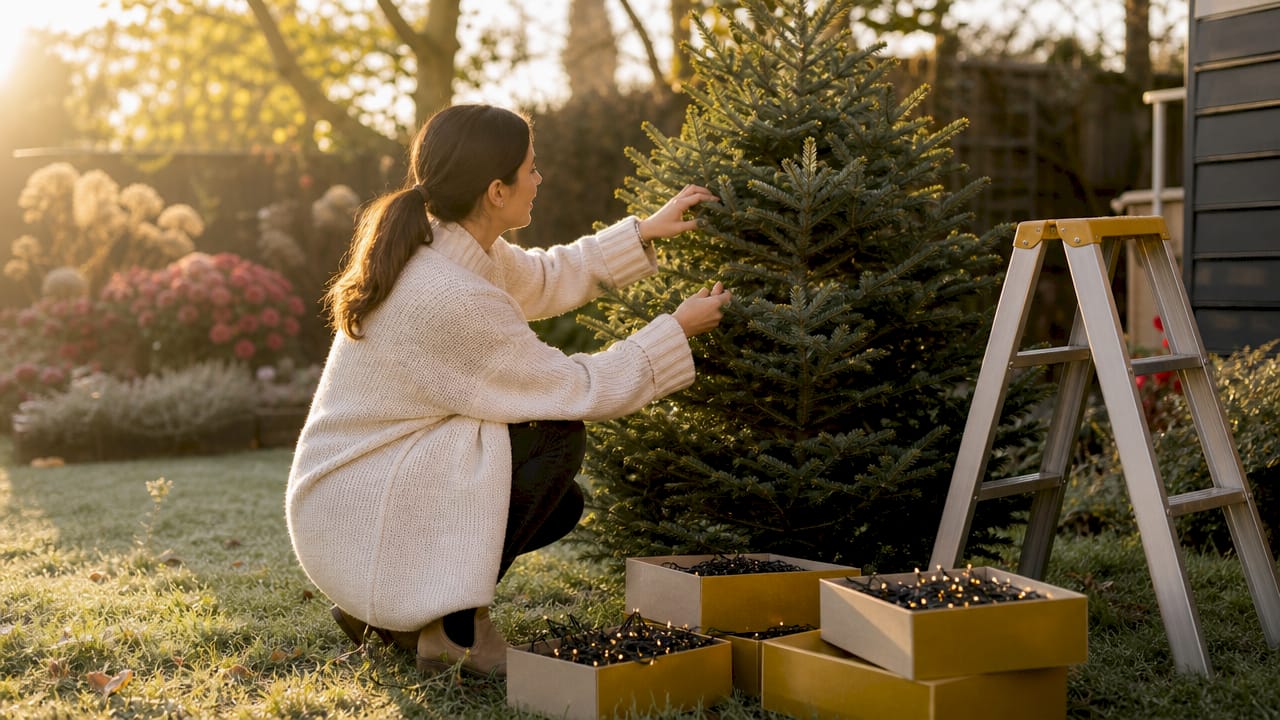
Premium artificial trees built with a combination of PVC and PE branches offer the best foundation for professional lighting. PVC inner branches add fullness while PE outer branches add realistic texture and durability. That combination supports heavy lighting systems without bending or collapsing over a season.
The key construction features to look for in a high-quality artificial tree include:
- Tip count: Premium trees use 1,500 or more branch tips. More tips mean more attachment points for lights and a fuller, more realistic appearance.
- Branch layering: Multi-tier branch systems create depth. Lights placed at different depths produce a three-dimensional glow rather than a flat surface effect.
- Pre-lit LED options: Many luxury artificial trees come pre-wired with commercial-grade LED bulbs. This removes the guesswork from light spacing and ensures consistent coverage.
- Frame stability: A heavy-gauge steel center pole and locking branch sections keep the tree upright under the weight of dense lighting systems.
LED lighting lasts 25,000 or more hours and uses significantly less energy than incandescent bulbs. That lifespan means a quality pre-lit artificial tree can serve your home for many seasons without replacing bulbs. The upfront cost of a premium artificial tree pays off quickly when you factor in the savings on replacement lights and installation time.
Pro Tip: When buying an artificial tree, check that the pre-lit LEDs are rated for the full tree lifespan. Cheaper trees use low-grade bulbs that fail within two or three seasons.
3. How to choose the right tree for outdoor displays
Outdoor Christmas tree lighting requires a different approach than indoor displays. Weather, scale, and visibility from a distance all change the equation. The right pairing of tree species and light type makes the difference between a display that reads beautifully from the street and one that disappears into the dark.
5mm wide-angle LED mini-lights are the professional standard for trunk and branch wrapping. They use less energy, last longer, and produce a tight, even glow that works well on both conifers and deciduous trees. G40 and G50 globe lights work best as focal points on larger trees or as statement lighting on open-branch specimens.
Matching light type to tree structure is the detail most homeowners overlook. Dense conifers like Leyland Cypress and Firs produce excellent internal glow when lit from within. Open-branch deciduous trees like Japanese Maples showcase intricate branch wrapping far better than globe lights draped loosely over the canopy.
For outdoor lighting density, the 100-lights-per-vertical-foot rule applies to trees just as it does indoors. A 10-foot outdoor tree needs at least 1,000 lights for proper coverage. Luxury estate displays often push to 150 lights per foot for maximum visual impact. You can read more about outdoor light style options to match the right bulb type to your specific tree.
Pro Tip: Always use weatherproof, UL-listed outdoor-rated lights for any tree exposed to rain, wind, or coastal air. Indoor lights used outdoors fail quickly and create safety hazards.
4. What lighting strategies make Christmas trees look their best?
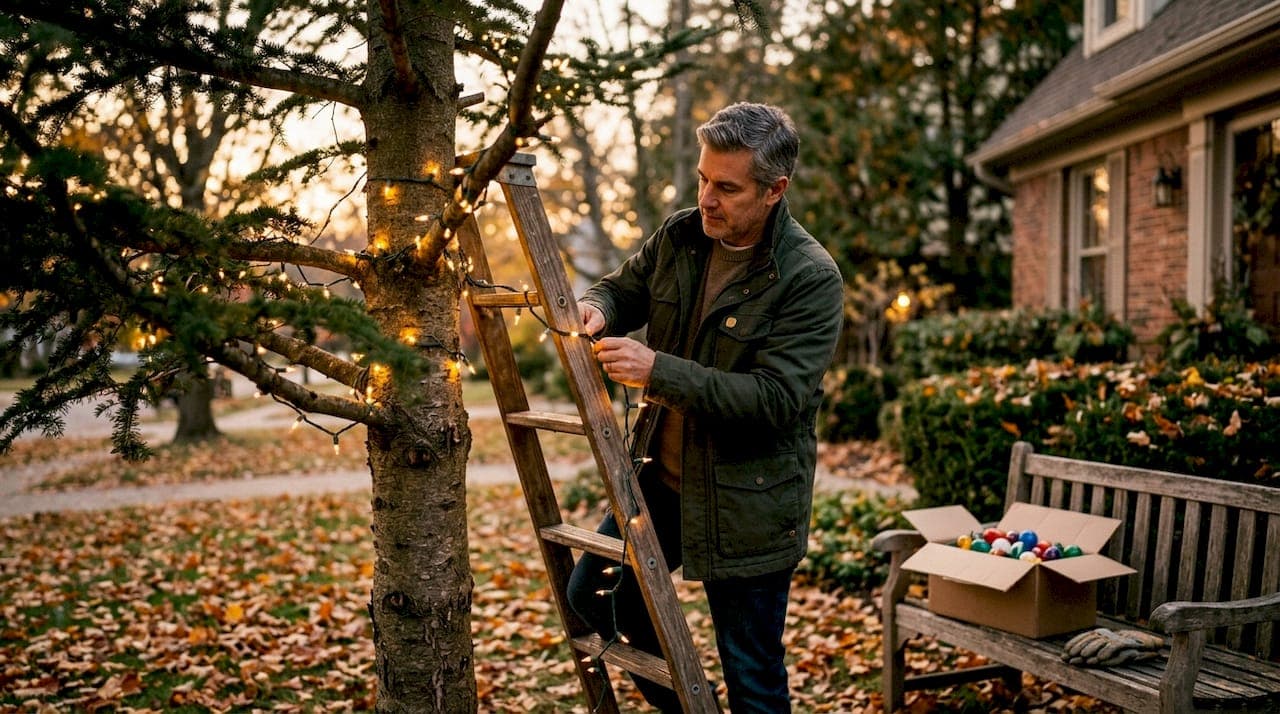
Professional lighting technique separates a stunning display from a mediocre one. The method starts from the inside out. Trunk wrapping comes first, using tight spacing to build a bright core. Canopy draping follows, using longer strings to add dimension and depth.
The key principles of professional tree lighting include:
- Start at the trunk: Wrap the trunk tightly from base to top before touching the branches. This creates a luminous spine that makes the whole tree glow from within.
- Work outward in layers: Move from inner branches to outer tips. Each layer adds depth. Lights placed only on outer tips look flat and one-dimensional.
- Avoid over-wrapping small twigs: Focusing on trunk density with canopy draping produces a sophisticated result. Wrapping every twig creates a cluttered, busy look.
- Match color temperature: Mixing LED batches with different color temperatures causes clashing shades that undermine a cohesive display. Buy all lights from the same product line.
- Balance warm white and color: Warm white at 2700K creates a classic, elegant look. Multicolor lights work best as accents rather than the primary source.
"The most common mistake in holiday tree lighting is starting at the branches instead of the trunk. When you build light from the inside out, the tree looks alive. When you start at the tips, it looks decorated. There is a real difference between the two."
Wiring safety matters as much as aesthetics. Never connect more strings than the manufacturer's rated maximum. For large outdoor trees, use a dedicated outdoor-rated extension cord and a weatherproof timer to control run hours and reduce energy use. Learn more about professional vs. store-bought lights to understand why commercial-grade wiring outperforms retail options for large displays.
Key takeaways
The best results in Christmas tree lighting come from matching tree structure to the right light type and applying professional density and layering techniques from the start.
| Point | Details |
|---|---|
| Tree structure drives results | Choose trees with strong branches and open tiers, like Fraser Fir or Noble Fir, for even light distribution. |
| Use 100 lights per vertical foot | This professional benchmark ensures full coverage; luxury displays use 150 or more lights per foot. |
| Start lighting at the trunk | Trunk wrapping before canopy draping creates depth and a glowing internal effect. |
| Match color temperature | Buy all LED strings from the same product line to avoid clashing shades across the display. |
| Outdoor trees need rated lights | Always use UL-listed, weatherproof lights for any tree exposed to outdoor conditions. |
What I've learned from years of lighting trees on estates
After working on holiday lighting installations across Bel Air, Beverly Hills, and Pacific Palisades, the pattern I see most often is homeowners choosing a tree based on how it looks in the lot rather than how it will hold lights. A beautiful, dense tree can actually work against you if the branches are too soft or the canopy is too tight to let light breathe.
The Noble Fir is the most underrated tree for serious lighting. Its wide branch spacing looks almost too sparse in the store, but once you wrap the trunk and layer lights through those open tiers, the result is extraordinary. The light has room to move. That is what separates a display that photographs well from one that just looks busy.
The other mistake I see constantly is inconsistent color temperature. A homeowner buys half their lights in october and the other half in november from a different store. The two batches look identical in the box and completely different on the tree. Buy everything at once, from the same source, before the season starts.
Artificial trees get dismissed as a lesser option, but a premium PVC and PE tree with 1,500-plus tips holds lights better than most real trees. The branch positions are fixed, the structure is predictable, and you can plan your lighting layout before the season even begins. For a property where the display needs to look flawless every year, that consistency is worth a great deal.
— Chris
Holiday lighting done right, by Elegant Outdoor Lights
Selecting the right tree is only the first step. Installing lights at professional density, with correct wiring, consistent color temperature, and the right bulb type for your specific tree, is where most homeowners run into trouble.
Elegant Outdoor Lights designs and installs custom holiday lighting for private estates across Los Angeles, including Bel Air, Beverly Hills, Pacific Palisades, and Malibu. Every installation is custom-designed at dusk, professionally executed, and fully maintained throughout the season. For homeowners who want their property to look like a landmark on the street, Elegant Outdoor Lights also offers year-round landscape lighting that complements seasonal holiday displays beautifully. Contact Elegant Outdoor Lights to schedule a consultation.
FAQ
What is the best real tree species for Christmas lighting?
Fraser Fir is the top choice for professional lighting installations. Its stiff, upward-angled branches support commercial-grade LED strings without drooping, and its needles stay intact for up to six weeks with proper watering.
How many lights do I need for a Christmas tree?
The professional standard is 100 LED lights per vertical foot of tree height. A 6-foot tree needs at least 600 lights; luxury displays use 150 or more lights per foot for maximum visual impact.
Are artificial trees better than real trees for lighting?
Premium artificial trees built with PVC and PE branches offer predictable structure and up to 1,500-plus branch tips for consistent light attachment. They hold lighting systems reliably year after year, which makes them a strong choice for homeowners who want a repeatable, high-quality display.
What type of lights work best for outdoor trees?
5mm wide-angle LED mini-lights are the professional standard for outdoor trunk and branch wrapping. They use less energy, last 25,000 or more hours, and must be UL-listed for outdoor use to handle weather exposure safely.
Why does color temperature matter for Christmas tree lighting?
Mixing LED strings from different batches or manufacturers produces clashing shades that undermine a cohesive display. Buying all lights from the same product line at the same color temperature, ideally warm white at 2700K, keeps the look polished and intentional.