TL;DR:
- Smart outdoor lighting systems adapt automatically to schedules, motion, and environment, enhancing security, appearance, and energy efficiency.
- Choosing the right system depends on factors like sensor technology, zoning, connectivity, and budget, especially for large estates.
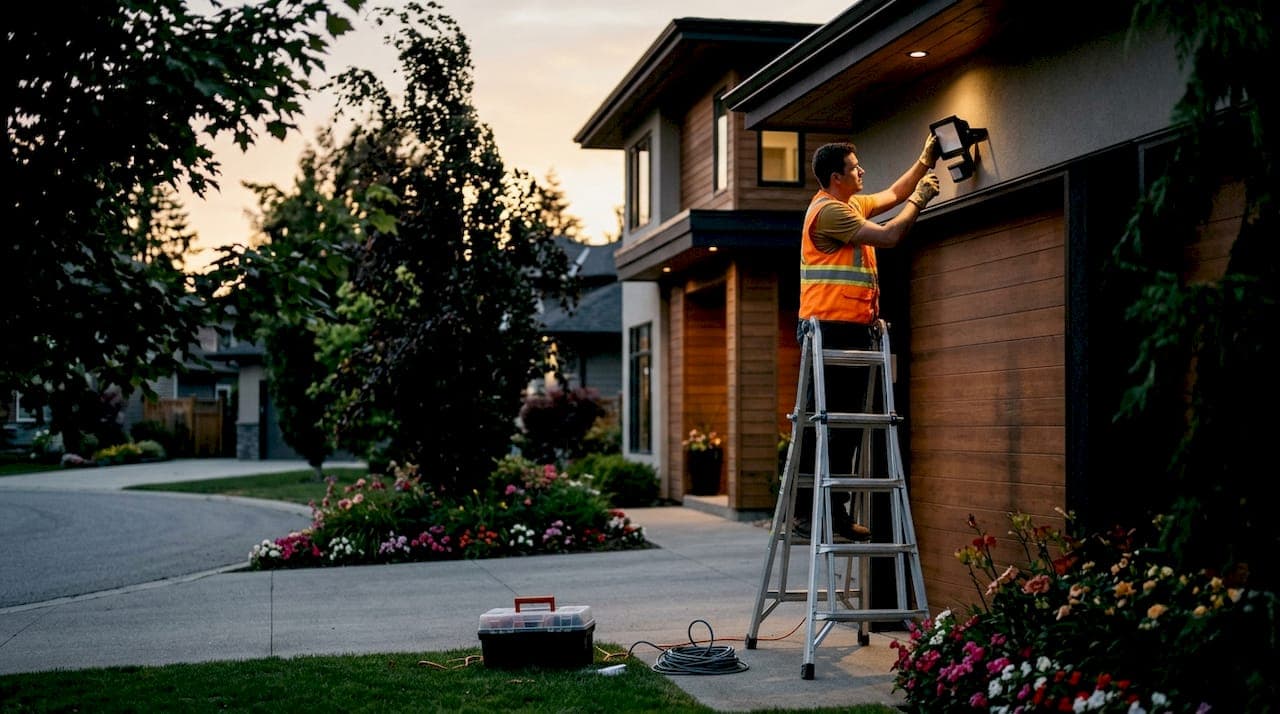
Smart outdoor lighting systems are intelligent lighting solutions that adapt automatically to schedules, motion, and environmental conditions to improve your property's security, appearance, and energy use. The types of smart outdoor lighting systems available today range from solar-powered path lights to radar-activated floodlights and fully integrated landscape ecosystems. Properly planned smart lighting with motion triggers and randomized schedules reduces porch theft and intrusions by about 60%. That single statistic explains why homeowners and property managers across Los Angeles are replacing static fixtures with automated outdoor lighting systems. Whether your priority is security, curb appeal, or energy savings, the right system starts with understanding what each type actually does.
1. What are the main types of smart outdoor lighting systems?
Automated outdoor lighting control systems fall into six clear categories. Each serves a distinct purpose, and most luxury properties use a combination of several.
- Solar-powered smart path and spotlights. These are wireless, self-contained, and require no trenching or electrical work. They suit garden borders, walkways, and accent positions. Solar fixtures typically cost $15–$60, making them the most affordable entry point into smart garden lights.
- Hardwired smart floodlights with motion sensors. These deliver the brightest output and the most reliable power supply. They are the standard choice for driveways, garage aprons, and perimeter security zones.
- Smart landscape lighting ecosystems. These are integrated systems of low-voltage LED fixtures, in-ground controllers, and app-based controls. They cover pathways, garden edges, trees, and architectural features from a single platform.
- Decorative smart string and rope lights with RGB scene presets. Smart string lights with RGBIC effects and segmented controls have moved from novelty to a standard tool for patios, pergolas, and seasonal displays. They support holiday presets and scene customization.
- Wall-mounted smart sconces and architectural accent lights. These mount to exterior walls and columns. They combine ambient illumination with motion detection and are common on estate entryways and covered terraces. You can explore the full range of options in this exterior wall lighting guide.
- Permanent roofline and eave smart lighting. These are fixed LED systems installed along rooflines for year-round use. They replace seasonal string lights and support color-changing scenes for holidays and events. Learn more about these in this permanent outdoor lighting guide.
2. How motion detection technologies differ across smart outdoor lighting types
Not all motion sensors perform equally. The sensor type determines how accurately your lights respond and how often they trigger unnecessarily.
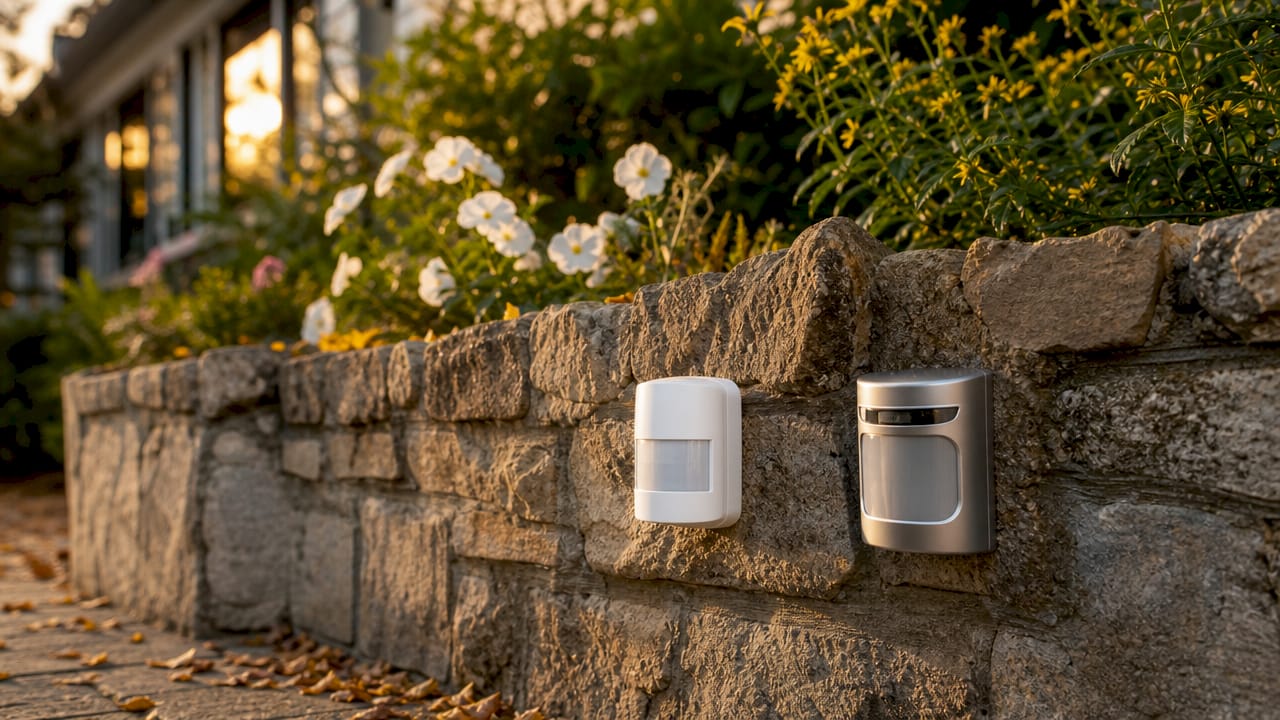
Traditional PIR (Passive Infrared) sensors detect heat signatures crossing their field of view. They are inexpensive and widely used, but they struggle to distinguish between a person, a car, and a passing animal. False alarms are common, especially in areas with wildlife or heavy wind.
Radar-activated systems represent a significant step forward. Radar-activated outdoor lighting provides up to 98% fewer false alarms versus PIR sensors by using AI to identify human movement patterns specifically. A 12-meter detection range and 120-degree field of view make these systems well suited for large estate perimeters.
| Sensor Type | Detection Method | False Alarm Rate | Best Use Case |
|---|---|---|---|
| PIR (Passive Infrared) | Heat signature | High | Small yards, low-traffic zones |
| Radar with AI | Movement pattern analysis | Very low | Large estates, driveways, perimeters |
| Dual-tech (PIR + Microwave) | Combined heat and motion | Moderate | Mid-size properties, garages |
Randomized lighting schedules deter intruders by mimicking occupancy and removing predictability. Pairing radar sensors with randomized scheduling gives you both reactive and proactive security.
Pro Tip: Choose radar sensors for any zone larger than a standard suburban backyard. PIR sensors work well for tight, enclosed spaces where false triggers from wind or animals are unlikely.
3. What role does zoning and automation play in smart outdoor lighting systems?
Zoning is the practice of dividing your property's lighting into independently controlled groups. Each zone responds to its own schedule, sensor trigger, or ambient light reading.
Smart outdoor lighting systems use zoned control to trigger specific lighting areas based on motion or schedules, improving energy use and minimizing light pollution. A well-zoned estate might separate the front entry, driveway, garden perimeter, pool deck, and roofline into five distinct zones. Each activates only when needed.
Automation options within each zone include:
- Scheduling. Lights turn on at sunset and off at a set time, or follow a randomized pattern for security.
- Motion triggers. A zone activates when a sensor detects movement, then dims or shuts off after a set idle period.
- Ambient light response. A photocell reads natural light levels and activates fixtures only when darkness falls, regardless of the clock.
- Occupancy-adaptive control. Luxury estate lighting now uses AI algorithms to dynamically adjust color temperature and intensity from 2700K warm tones to 6500K cool daylight based on predicted occupancy. This is the current standard in high-end automated outdoor lighting control systems.
The industry is shifting from blanket outdoor lighting to zone-based, sensor-triggered lighting ecosystems to maximize efficiency and minimize light pollution. That shift reflects both energy cost pressures and growing awareness of how excess light affects the surrounding environment.
4. What are the connectivity options for outdoor smart lighting?
How your lights connect to your network determines their reliability, range, and integration potential. This is the most overlooked factor when homeowners choose best smart home integrated lighting systems.
Wi-Fi smart lights are limited to 2.4 GHz networks outdoors. The 5 GHz band, which many modern routers favor, does not reach most outdoor fixtures reliably. On a large estate, even 2.4 GHz Wi-Fi can drop signal across long distances or through thick walls and landscaping.
Zigbee and Bluetooth mesh networks solve this problem by creating a self-extending web of connected devices. Each fixture acts as a relay point, passing signals along the network. This makes mesh connectivity the preferred choice for properties with extensive grounds.
Key connectivity options to know:
- Wi-Fi (2.4 GHz). Simple setup, works with most routers, but limited range and dependent on a strong home network signal.
- Zigbee. Low-power, mesh-capable, and widely supported by hubs like Amazon Echo and Samsung SmartThings. Excellent for large properties.
- Bluetooth mesh. No hub required for basic control, but range is shorter than Zigbee without a dedicated bridge.
- Smart home hub integration. Systems that connect through Apple HomeKit or Google Home allow voice control and unified app management across all zones.
Pro Tip: On any property larger than half an acre, plan your network before you buy fixtures. A Zigbee mesh or dedicated smart lighting hub will save you significant troubleshooting time compared to relying on Wi-Fi alone.
5. Which factors should homeowners consider when choosing smart outdoor lighting?
The best outdoor lighting solutions for your property depend on four factors: cost, energy efficiency, security requirements, and aesthetic goals.
Cost. Hardwired smart floodlights range from $40–$200 per fixture depending on brightness and sensor type. Solar path lights start at $15. Beyond fixtures, professional calibration and programming can add 20–50% to the total cost of a luxury smart lighting installation. That investment is what separates a coordinated, designer-level result from a collection of unrelated fixtures.
Energy efficiency. LED outdoor lighting options consume a fraction of the power that halogen or incandescent fixtures use. Solar fixtures eliminate grid consumption entirely for low-output zones. Energy management features including dimming, scheduling, and occupancy-based control reduce waste further without sacrificing performance.
Security. Radar sensors with AI detection and randomized scheduling deliver the strongest deterrent effect. For estate-level security, combine perimeter floodlights with motion-triggered pathway lights and a zoned control platform.
Aesthetics and architecture. Color temperature tuning, scene presets, and fixture style all affect how your property reads after dark. For guidance on integrating lighting with your home's architecture, this architectural lighting design guide covers the design principles that professional installers use on large estates.
Maintenance. Solar fixtures require periodic panel cleaning and battery replacement. Hardwired systems need professional inspection of connections and sensors. Permanent roofline systems, when professionally installed, typically require the least ongoing attention.
Key Takeaways
The most effective smart outdoor lighting strategy combines zone-based control, radar motion detection, and LED efficiency to deliver security, aesthetics, and energy savings from a single coordinated system.
| Point | Details |
|---|---|
| Sensor technology matters | Radar with AI detection produces up to 98% fewer false alarms than standard PIR sensors. |
| Zoning reduces energy waste | Dividing your property into independently controlled zones activates lights only where and when needed. |
| Connectivity affects reliability | Zigbee and Bluetooth mesh networks outperform Wi-Fi on large properties with extensive grounds. |
| Professional calibration adds value | Expert programming can add 20–50% to installation cost but delivers coordinated, designer-level results. |
| Security requires randomization | Randomized lighting schedules mimic occupancy and reduce intrusion risk more effectively than static timers. |
What I've learned about smart outdoor lighting after years on estate properties
Most homeowners approach smart outdoor lighting as a product decision. They compare fixture specs, pick a brand, and install. What they miss is that the system is the product, not the individual fixture.
On large properties in Bel Air or Pacific Palisades, I've seen beautifully specified fixtures perform poorly because nobody planned the zones, the network, or the sensor placement. A $200 radar floodlight pointed at a reflective pool surface will trigger constantly. A Zigbee mesh with three devices on a two-acre property will drop signal at the far garden wall. The specs looked right on paper.
The shift toward occupancy-adaptive lighting, where color temperature and intensity adjust based on predicted use rather than a fixed schedule, is the most meaningful change I've seen in this space. It moves lighting from a security tool to an experience layer. A driveway that transitions from a bright, cool welcome light to a warm, low ambient glow as guests move inside is a different category of design entirely.
My honest advice: if your property is larger than a standard suburban lot, hire a lighting designer before you buy a single fixture. The design principles that follow architecture will save you from expensive reinstallation and give you a result that actually matches the property.
— Chris
Elegant Outdoor Lights: professional smart lighting for distinguished estates
Elegant Outdoor Lights designs and installs architectural landscape lighting for private estates across Los Angeles, including Bel Air, Beverly Hills, Pacific Palisades, and Malibu. Every project is custom-designed at dusk, calibrated to the property's architecture and grounds, and professionally maintained year-round.
If you are ready to move beyond off-the-shelf fixtures and into a fully coordinated lighting system, our team handles everything from zone planning and network setup to fixture selection and final calibration. Explore our landscape lighting design and installation services to see what a professionally designed system looks like on properties like yours. For seasonal displays, our holiday lighting installation service brings the same white-glove approach to festive lighting.
FAQ
What is the most energy-efficient type of smart outdoor lighting?
LED fixtures with occupancy-based dimming and scheduling deliver the best energy efficiency. Solar-powered LED path lights eliminate grid consumption entirely for low-output zones.
How do smart outdoor lights improve home security?
Smart outdoor lighting improves security by combining motion-triggered activation with randomized schedules that mimic occupancy. Properly planned systems reduce porch theft and intrusions by about 60%.
What connectivity standard works best for large outdoor properties?
Zigbee mesh networks provide the best reliability and range for large properties. Wi-Fi smart lights are limited to 2.4 GHz and lose signal across long distances or through dense landscaping.
Do smart outdoor lighting systems require professional installation?
Solar path lights are DIY-friendly, but hardwired floodlights, landscape ecosystems, and permanent roofline systems benefit from professional installation. Professional calibration and programming can add 20–50% to the cost but delivers a coordinated, fully integrated result.
Can smart outdoor lighting integrate with Apple HomeKit or Google Home?
Yes. Most Zigbee-based and Wi-Fi-based smart outdoor fixtures support Apple HomeKit, Google Home, or both through a compatible hub. This allows voice control and unified management of all lighting zones from a single app.